Varicose veins are a common vascular condition that affects many people, especially those who spend long hours standing, sitting, or leading a sedentary lifestyle. The condition occurs when vein valves become weak, causing blood to pool in the veins, resulting in swelling, discomfort, heaviness, and visible twisted veins. In India, prolonged standing at work is one of the most frequently reported triggers, which is why teachers, surgeons, retail staff and traffic personnel are affected more often.
While medical intervention remains the most effective way to treat underlying vein problems, yoga can be an excellent complementary practice. Certain yoga asanas help improve blood circulation, reduce pressure in the legs, strengthen muscles, and support overall vascular health.
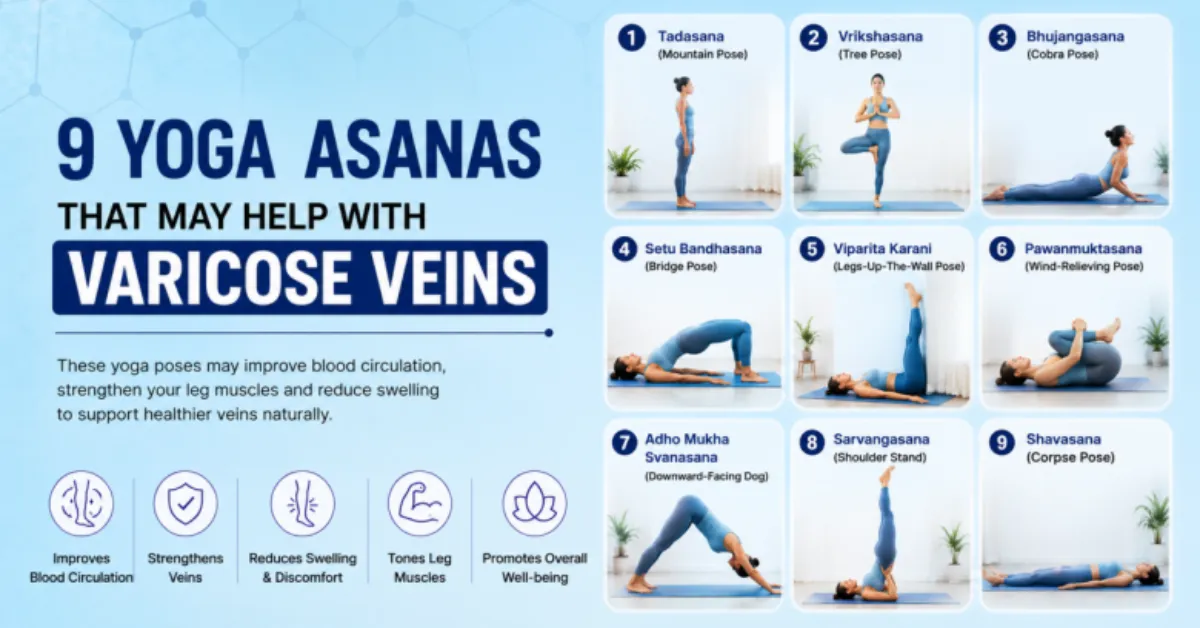
If you are dealing with varicose veins, here are nine yoga poses that may help manage symptoms and support circulation and mobility. Always get an ultrasound-based diagnosis before starting any exercise routine, as some poses are unsafe if you have deep vein thrombosis or advanced venous disease.
Can Yoga Cure Varicose Veins?
It’s important to understand that yoga cannot eliminate damaged veins. However, regular practice may:
- Improve blood circulation
- Reduce swelling and heaviness
- Enhance flexibility
- Strengthen calf muscles
- Promote relaxation and stress reduction
Yoga works best when combined with professional Varicose Veins Treatment in Ahmedabad and healthy lifestyle habits.
Safety First: Before You Begin
Avoid or modify these poses, and speak to your doctor first if you have any of the following:
- Diagnosed or suspected deep vein thrombosis (DVT)
- Active leg ulcers, bleeding veins or skin infection
- Uncontrolled high blood pressure, glaucoma or recent eye surgery (avoid inversions)
- Neck, shoulder or spine injury (avoid Shoulder Stand)
- Pregnancy (avoid Wind-Relieving Pose and inversions unless cleared)
- Recent vein surgery or ablation — follow your surgeon’s recovery timeline
Stop immediately if you feel sharp pain, numbness, dizziness or increased swelling.
1. Tadasana (Mountain Pose)
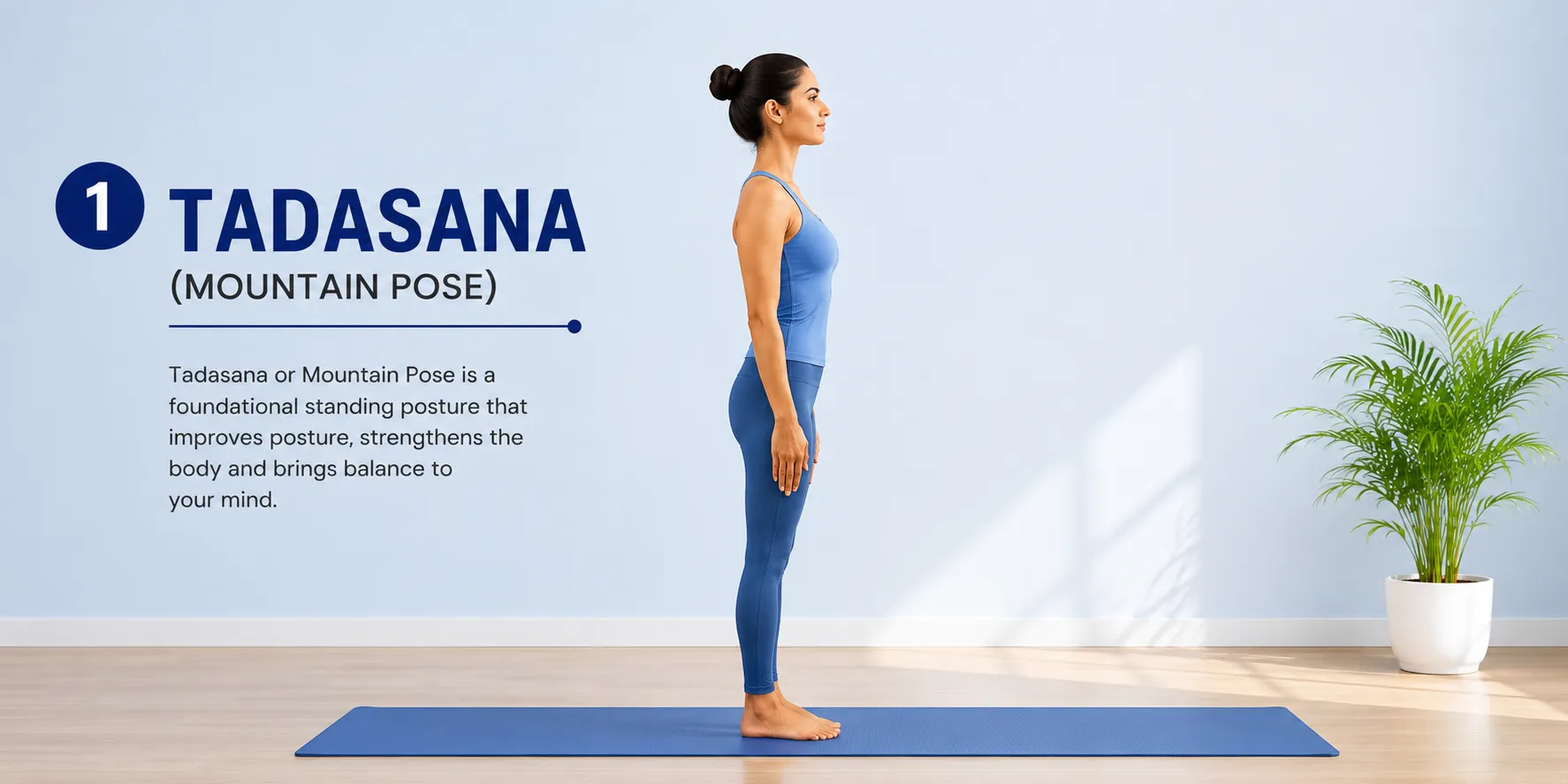
Although simple, Tadasana helps improve posture and circulation.
Benefits:
- Strengthens leg muscles
- Improves balance
- Enhances blood flow
- Reduces pressure on veins
Specialist tip: Add gentle heel raises here — rising onto the toes and lowering slowly activates the calf muscle pump, which is the single most useful movement for venous return.
2. Vrikshasana (Tree Pose)
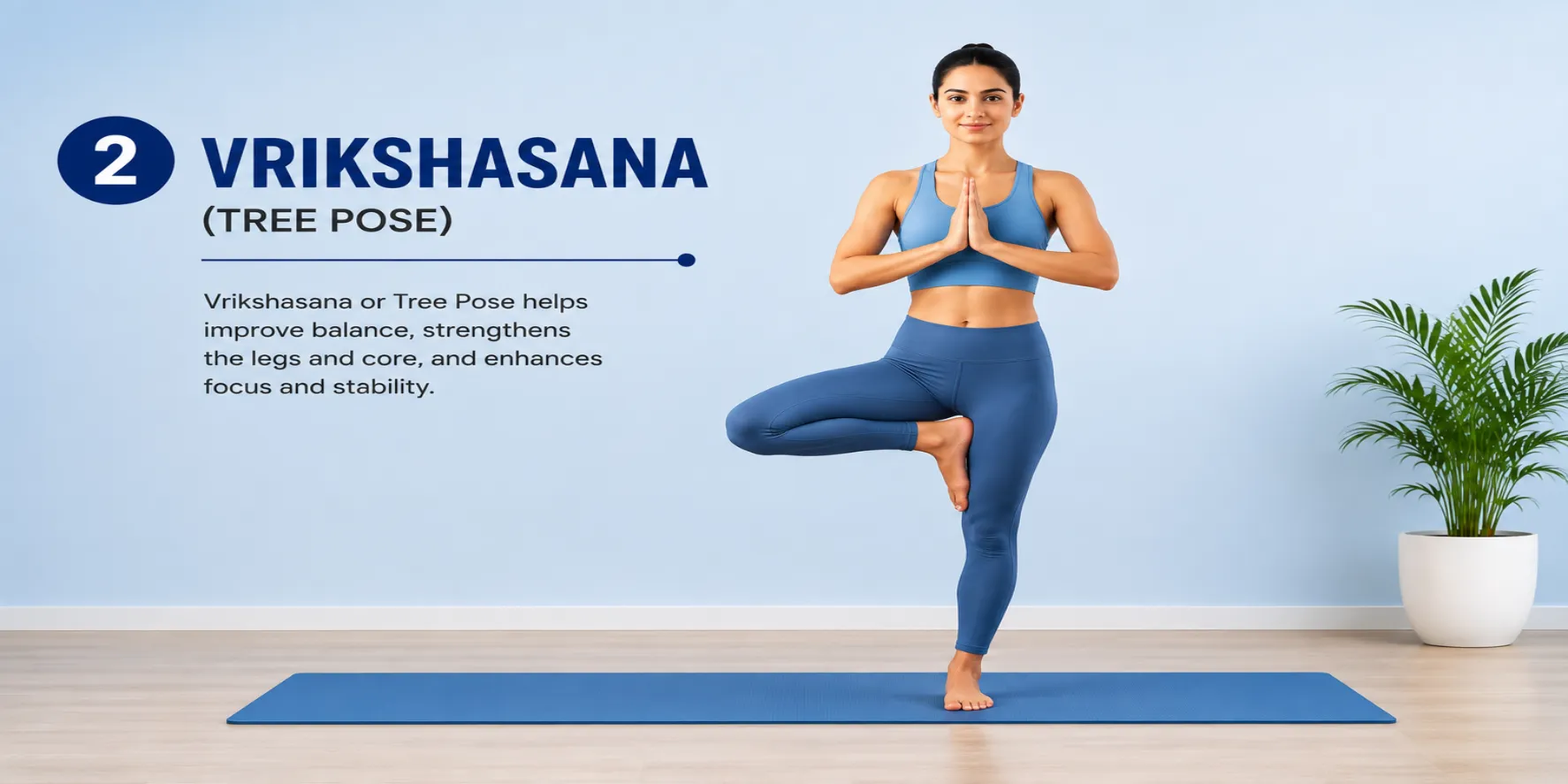
This balancing pose strengthens the legs and improves circulation. Practise on both sides while maintaining controlled breathing.
Benefits:
- Improves stability
- Activates leg muscles
- Enhances blood circulation
- Supports vascular function
Specialist tip: Use a wall for support if balance is difficult, so you are not straining the affected leg.
3. Bhujangasana (Cobra Pose)
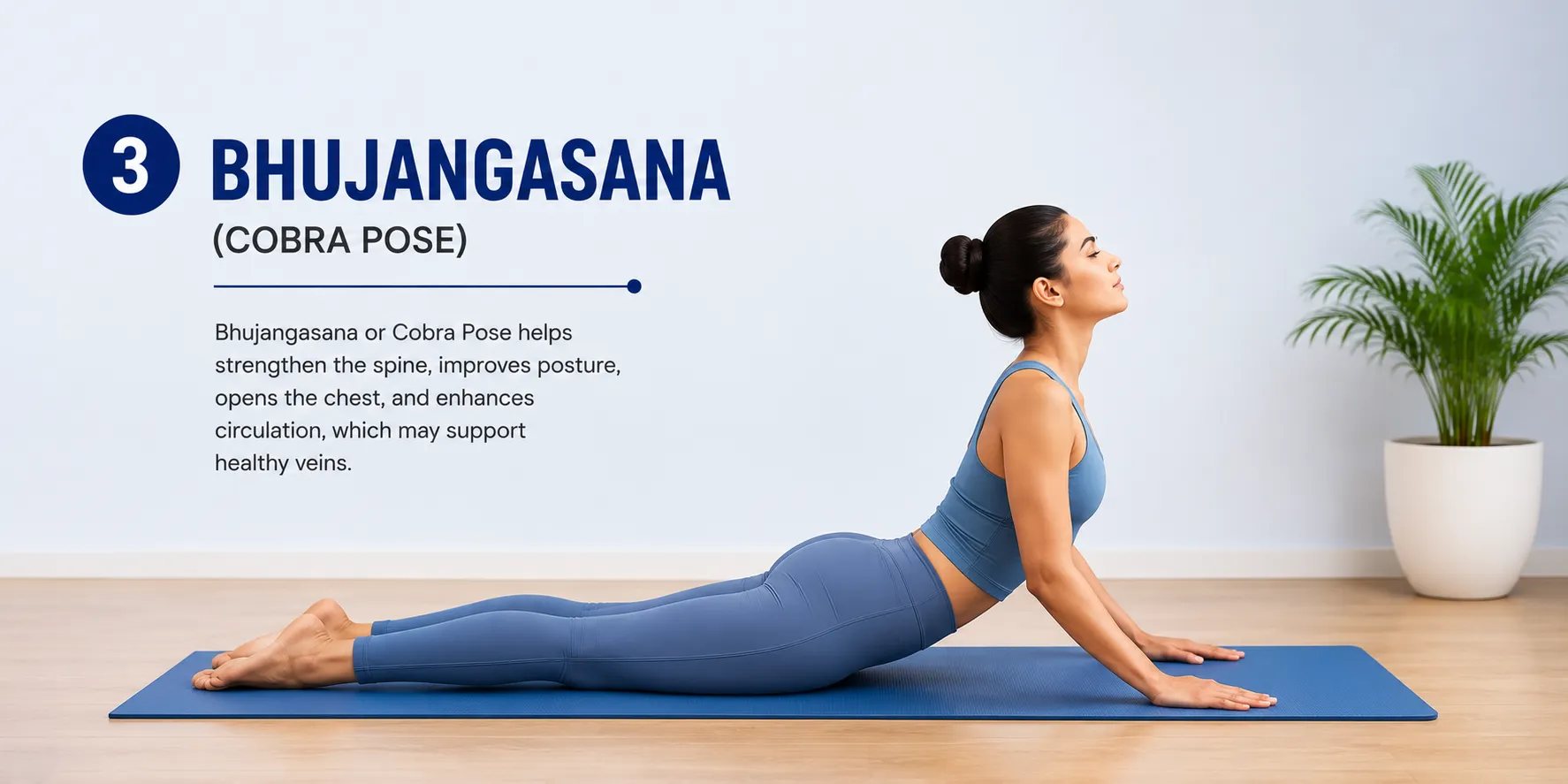
This gentle backbend improves circulation throughout the body.
Benefits:
- Enhances blood flow
- Stretches abdominal muscles
- Improves posture
- Supports overall circulation
Specialist tip: Avoid forcing the movement if you have lower back discomfort. Keep the elbows soft and lift only as far as feels comfortable.
4. Setu Bandhasana (Bridge Pose)
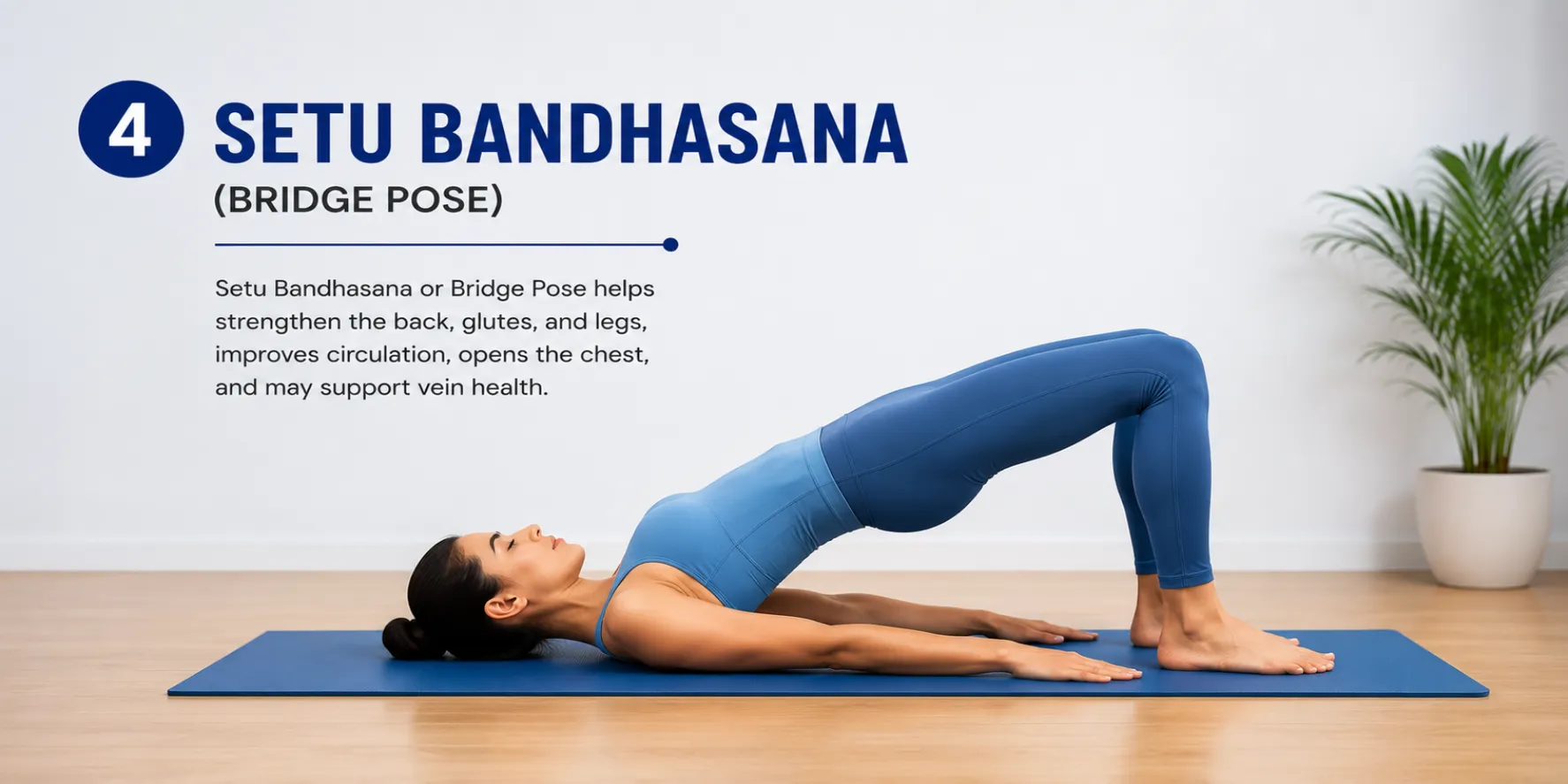
Bridge Pose is excellent for improving circulation in the lower body.
Benefits:
- Stimulates blood flow
- Strengthens glutes and thighs
- Reduces leg fatigue
- Supports venous return
Specialist tip: Hold the position for 15–30 seconds and repeat several times rather than holding one long lift.
5. Viparita Karani (Legs-Up-The-Wall Pose)
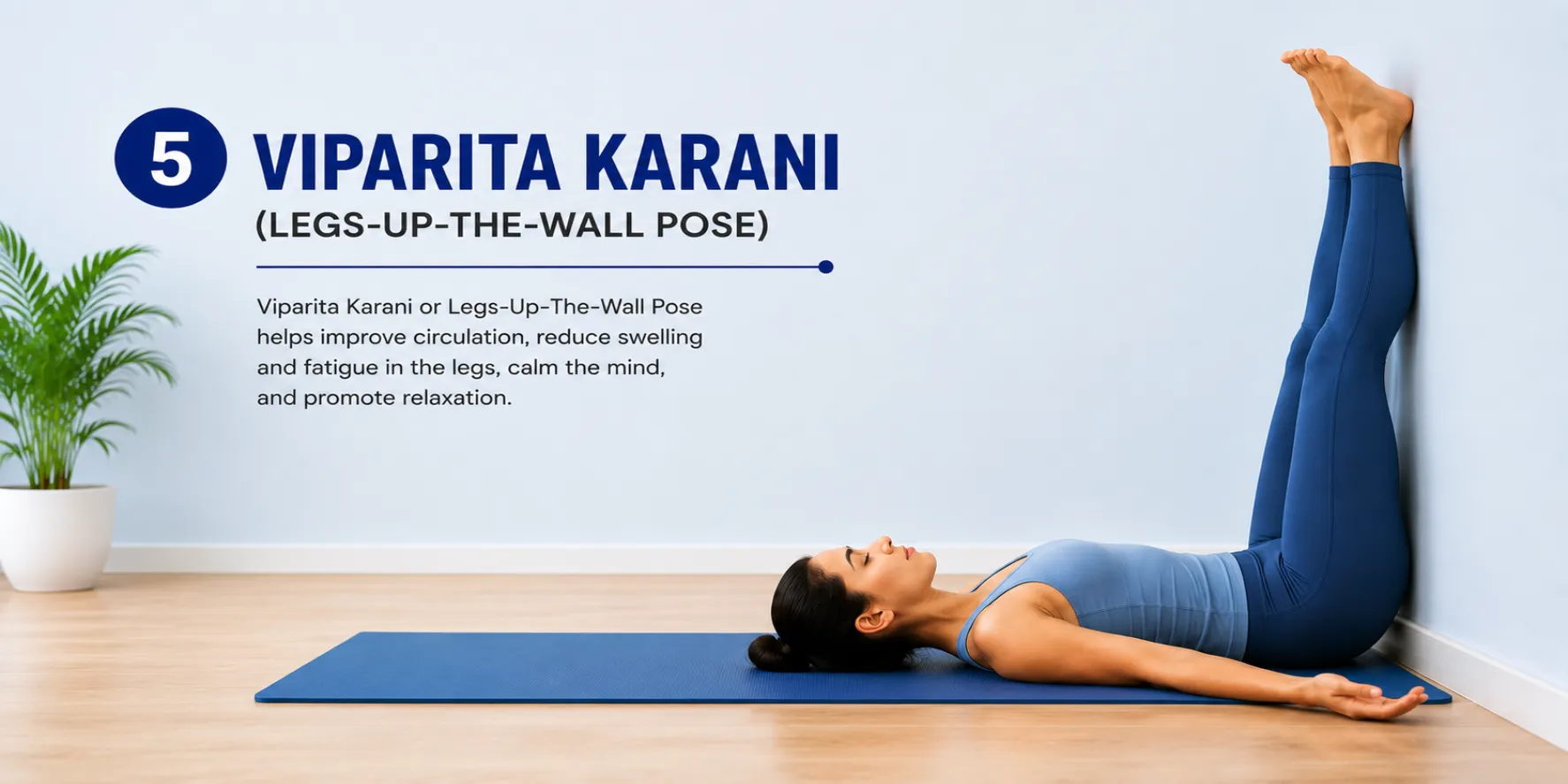
This is one of the most recommended yoga poses for people with varicose veins, and it can provide noticeable relief after a long day.
Benefits:
- Encourages blood flow back towards the heart
- Reduces swelling in the legs
- Relieves tired and heavy legs
- Promotes relaxation
Specialist tip: Hold for 5–10 minutes with the arms relaxed by your sides. This is the safest of the inverted poses and the one most people can do daily.
6. Pawanmuktasana (Wind-Relieving Pose)
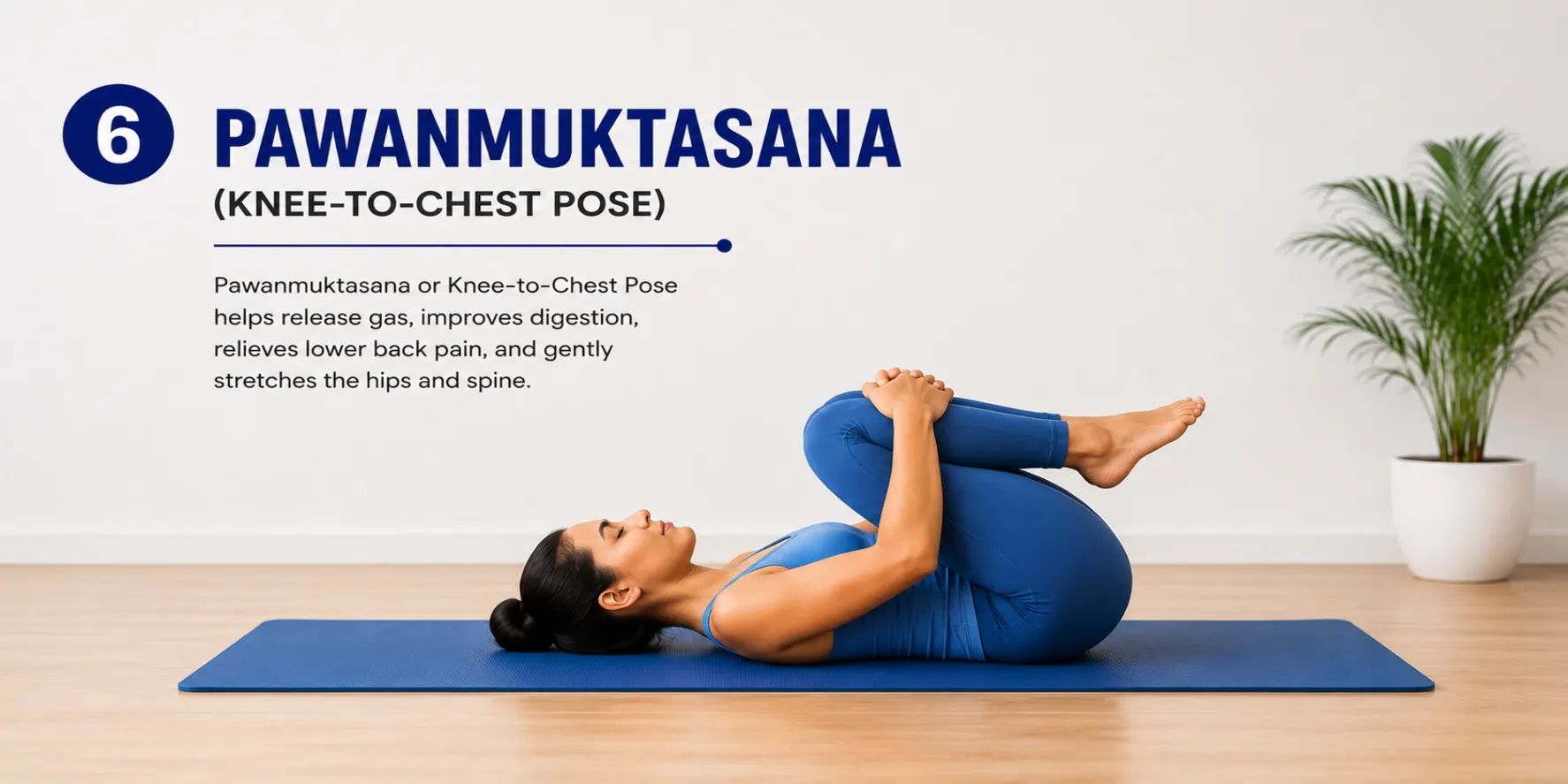
This pose gently massages the abdominal organs and improves circulation.
Benefits:
- Improves blood flow
- Supports digestion
- Reduces bloating
- Encourages healthy circulation
Specialist tip: Particularly helpful for people who spend long hours sitting. Draw one knee in at a time if both together strains the lower back.
7. Adho Mukha Svanasana (Downward-Facing Dog)
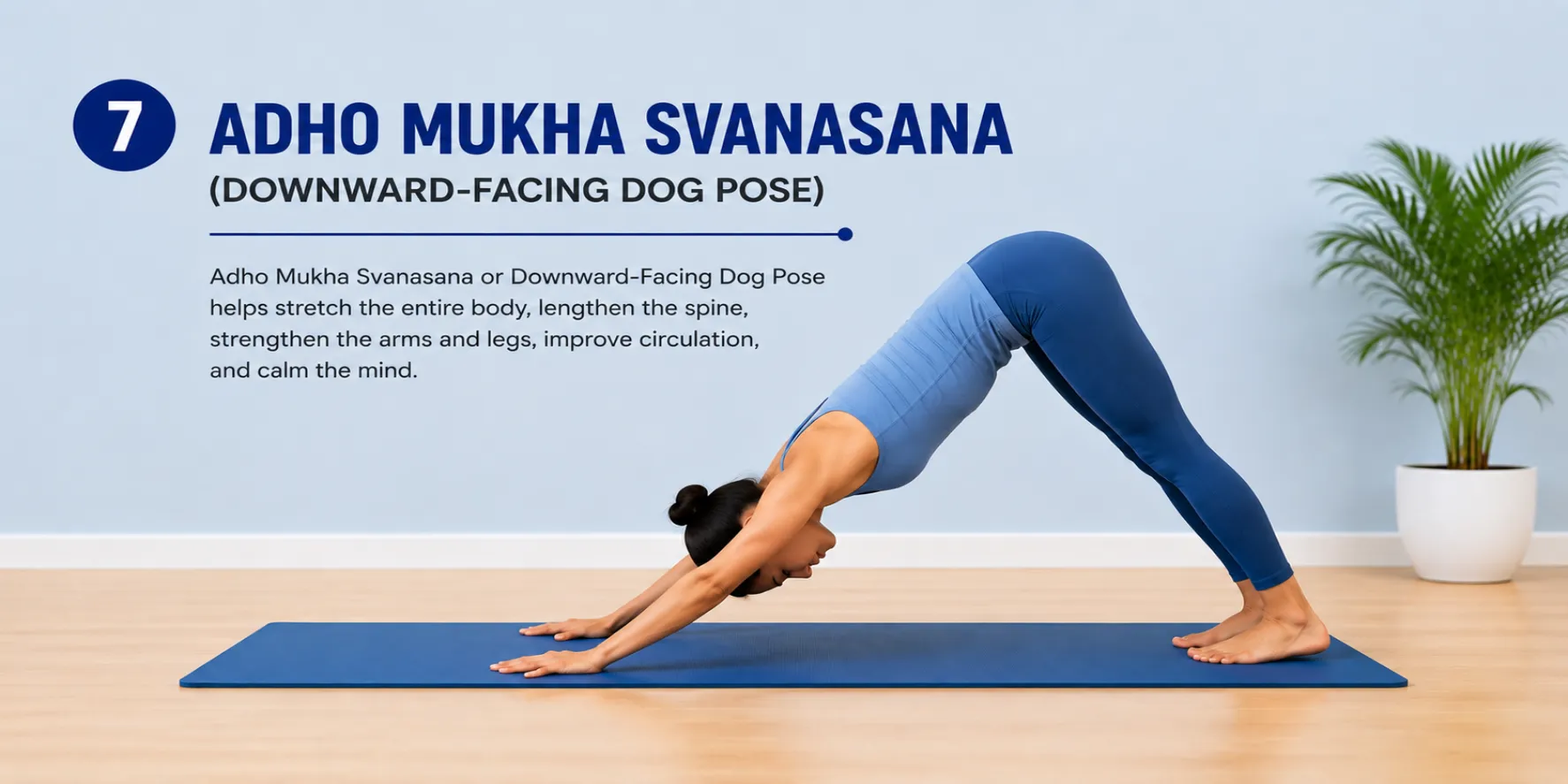
This inversion-style pose helps reverse the effects of gravity on the legs. Beginners may practise under professional guidance.
Benefits:
- Improves circulation
- Strengthens leg muscles
- Stretches calves and hamstrings
- Encourages venous drainage
Specialist tip: Skip this pose if you have uncontrolled hypertension, glaucoma or a wrist/shoulder injury.
8. Sarvangasana (Shoulder Stand)
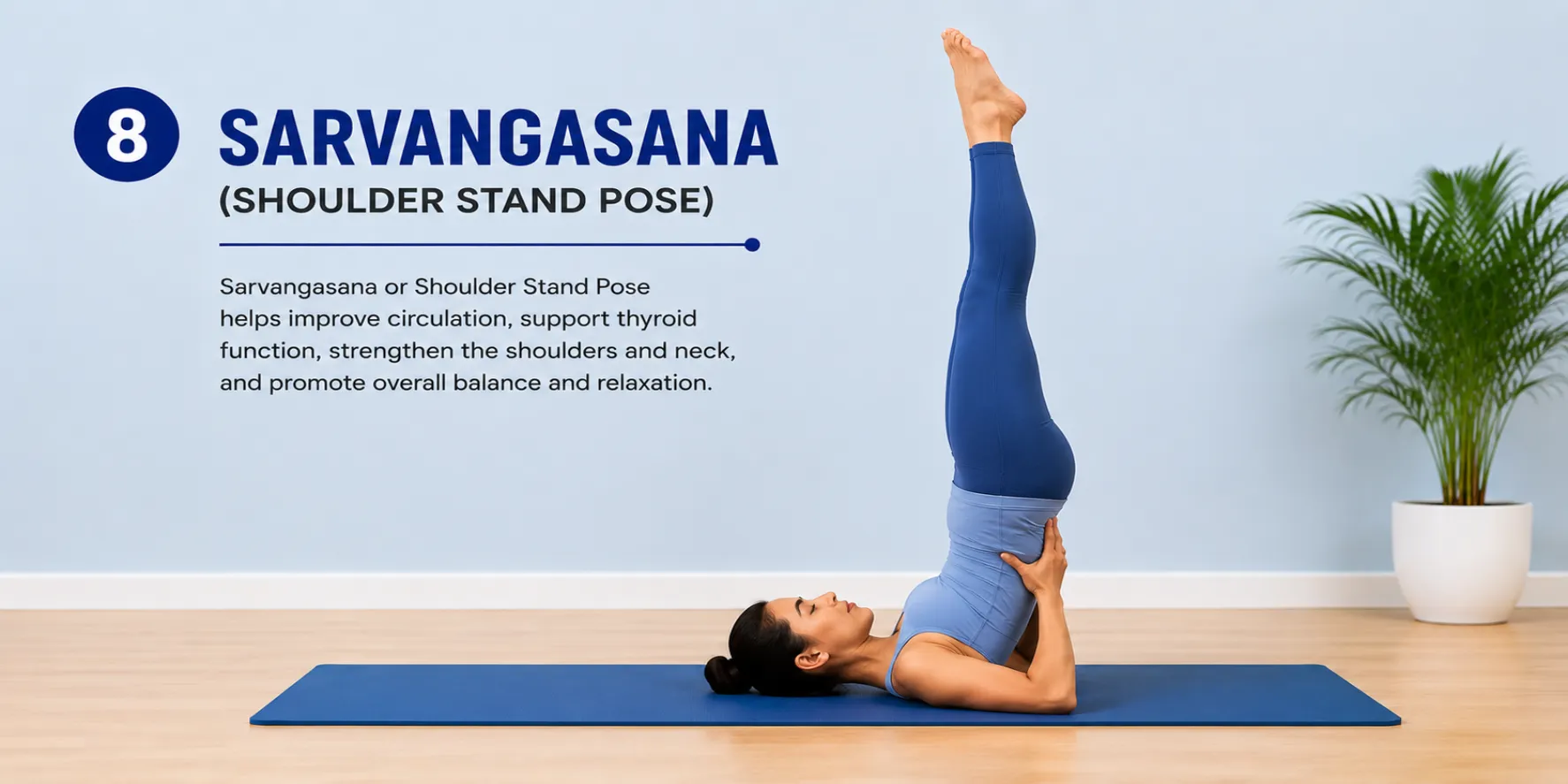
Sarvangasana is often called the “queen of asanas” due to its numerous health benefits.
Benefits:
- Encourages blood return from the legs
- Improves circulation
- Reduces leg heaviness
- Supports vascular health
Specialist tip: This is an advanced pose. Learn it only with a qualified instructor. Avoid it entirely if you have high blood pressure, neck injury, glaucoma, or are menstruating or pregnant. Legs-Up-The-Wall Pose is a far safer alternative with similar circulatory benefit.
9. Shavasana (Corpse Pose)
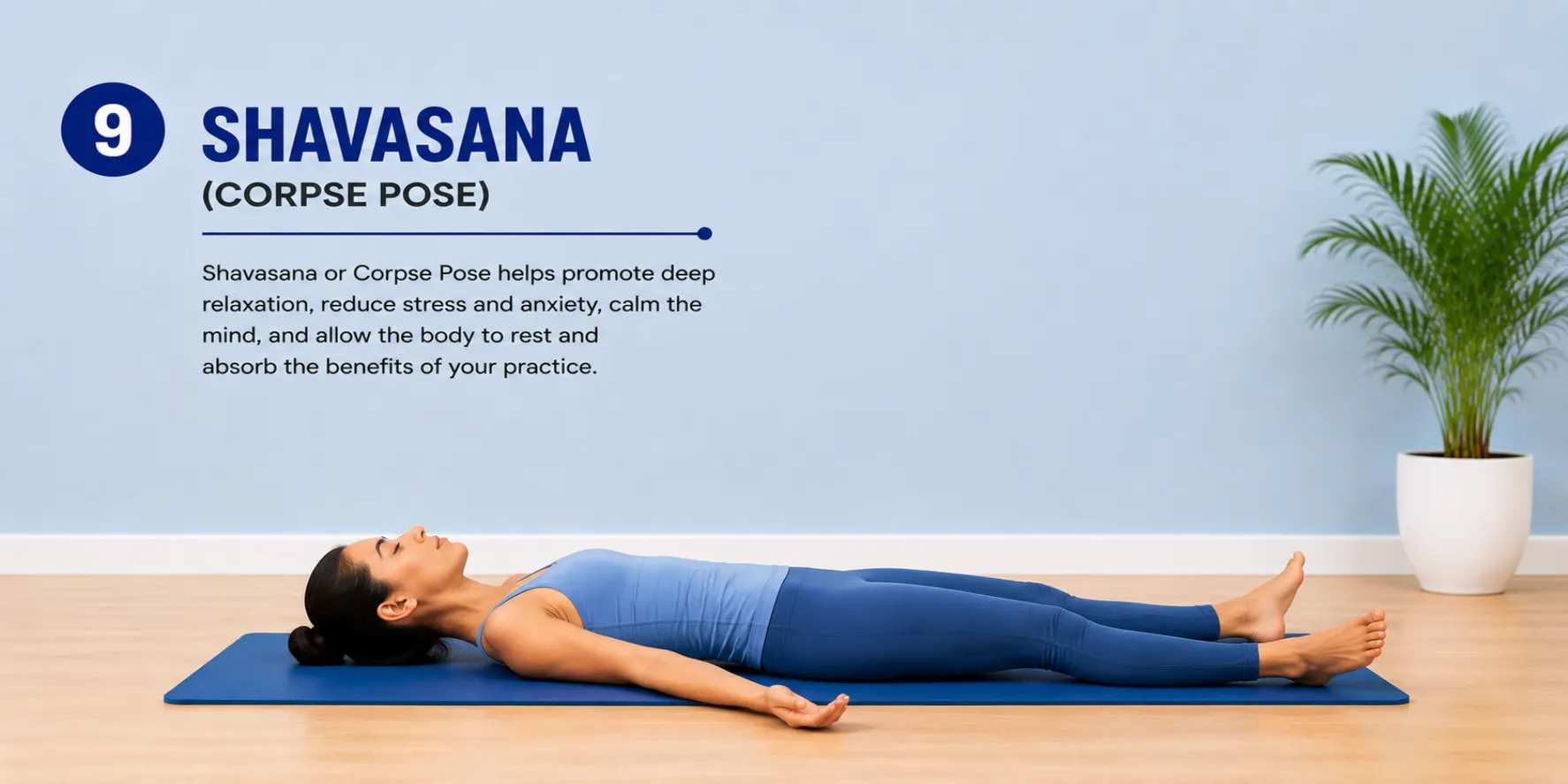
Recovery and relaxation are important components of vascular health.
Benefits:
- Reduces stress
- Lowers muscle tension
- Promotes relaxation
- Supports overall wellbeing
Specialist tip: Practise Shavasana at the end of every yoga session for at least five minutes.
Summary of Yoga Asanas for Varicose Veins
|
Yoga Asana |
Main Benefit |
|
Tadasana |
Strengthens legs and improves posture |
|
Vrikshasana |
Improves balance and blood flow |
|
Bhujangasana |
Enhances circulation |
|
Setu Bandhasana |
Supports venous return |
|
Viparita Karani |
Reduces swelling and improves circulation |
|
Pawanmuktasana |
Promotes healthy blood flow |
|
Adho Mukha Svanasana |
Improves circulation in legs |
|
Sarvangasana |
Encourages blood return to the heart |
|
Shavasana |
Relieves stress and promotes recovery |
How Often Should You Practise?
Aim for 20–30 minutes, 4–5 days a week. Consistency matters far more than intensity. Even 10 minutes of Legs-Up-The-Wall Pose daily can ease heaviness. Give yourself 6–8 weeks before judging results, and keep a simple note of your symptoms so you can discuss progress at your next consultation.
Additional Tips Alongside Yoga
For better management of varicose veins:
- Stay physically active
- Avoid prolonged standing or sitting
- Maintain a healthy weight
- Elevate your legs regularly
- Stay well hydrated
These habits work alongside yoga to support healthy circulation. Regular movement is especially important because it helps the calf muscles pump blood back towards the heart. If your job requires long hours of sitting or standing, try taking short walking breaks every 30–60 minutes to improve circulation.
Maintaining a healthy weight can also reduce unnecessary pressure on the veins in your legs. Excess body weight increases strain on the vascular system, making it harder for blood to circulate efficiently.
Leg elevation is another simple but effective habit. Raising your legs above heart level for 15–20 minutes a few times a day can help reduce swelling, relieve heaviness, and encourage better blood flow. Hydration plays a key role in maintaining healthy circulation. Drinking adequate water throughout the day helps improve blood flow and supports overall vascular function.
When Yoga is Not Enough
While yoga may help relieve symptoms, it cannot repair damaged vein valves or remove existing varicose veins. You should consult a specialist if you experience:
- Persistent leg pain
- Swelling
- Skin discoloration
- Visible enlarged veins
- Leg heaviness affecting daily activities
An experienced vascular surgeon in Ahmedabad can evaluate your condition and recommend appropriate treatment.
Modern Treatment Options for Varicose Veins
Today, several minimally invasive options are available:
|
Treatment |
Purpose |
|
Laser treatment for varicose veins |
Closes damaged veins using laser energy |
|
Sclerotherapy for varicose veins |
Treats smaller affected veins |
|
Advanced non-surgical procedures |
Faster recovery and minimal downtime |
Consulting a varicose veins doctor in Ahmedabad can help determine the best solution for your condition.
Final Thoughts
Yoga can be a valuable addition to your varicose vein management routine. Asanas such as Tadasana, Setu Bandhasana, Viparita Karani, and Downward Dog may improve circulation, reduce swelling, and provide relief from leg discomfort.
However, yoga should be viewed as a supportive measure rather than a replacement for medical treatment. If symptoms persist or worsen, seeking professional Varicose Veins Treatment is essential to prevent complications and improve long-term vascular health.
A combination of regular yoga, healthy lifestyle choices, and expert medical care offers the most effective approach to managing varicose veins and maintaining overall well-being.
Book a Consultation
Struggling with aching, heavy, or visibly swollen leg veins? Our vascular team at Dev Hospital offers Doppler evaluation and minimally invasive, day-care treatment for varicose veins in Ahmedabad. Book your consultation today.
This article is for general information only and is not a substitute for professional medical advice, diagnosis or treatment. Always consult a qualified doctor before starting a new exercise programme, especially if you have a diagnosed vascular condition. Never disregard medical advice because of something you have read here.
