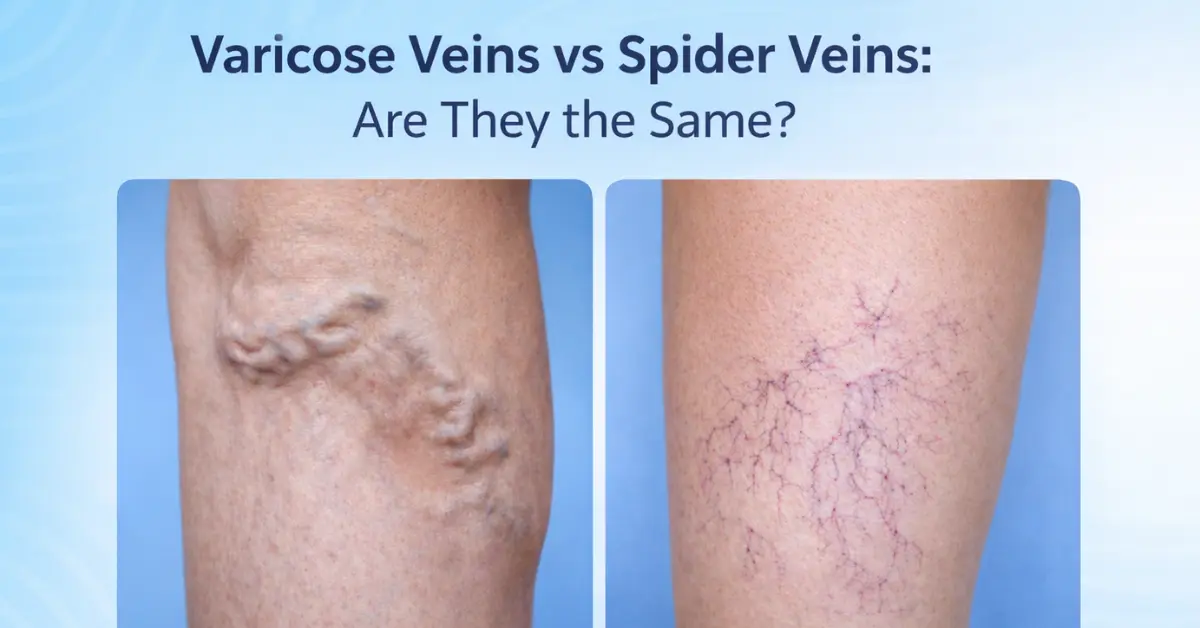
Visible veins are a common concern that often develops gradually over time, particularly in the legs. While many people consider them a cosmetic issue, not all vein changes are the same. The terms "varicose veins" and "spider veins" are frequently used interchangeably, which can make it difficult to understand whether they refer to the same condition. Although they may appear similar at first glance, they differ in their causes, appearance, and medical importance.
Understanding these differences can help you decide whether simple observation is enough or if medical evaluation may be required.
Key Differences Between Varicose Veins and Spider Veins
Although both conditions involve visible veins, the difference lies less in how they look at a glance and more in what is happening beneath the surface. Varicose veins reflect a breakdown in venous function, while spider veins are usually limited to superficial vessel changes.
Spider veins are generally harmless, while varicose veins may require medical attention depending on how they progress over time.
|
Aspect |
Varicose Veins |
Spider Veins |
|
Definition |
Enlarged, twisted veins caused by faulty valves that allow blood to flow backwards and pool inside the vein. |
Small, dilated surface blood vessels that form fine, web-like patterns near the skin. |
|
Underlying Cause |
Occur due to weakened or damaged vein valves that fail to push blood upward efficiently, leading to pooling and increased pressure in superficial veins. |
Occur due to dilation of small surface blood vessels, usually without significant valve failure or deep circulatory involvement. |
|
Vein Depth |
Affects superficial veins located beneath the skin surface in deeper layer of dermis. |
Affects tiny superficial vessels located in the uppermost layer of dermis. |
|
Appearance |
Large, raised, twisted or rope-like veins that are clearly visible and may bulge outward. |
Thin, web-like or branch-like patterns that spread across the skin surface. |
|
Colour |
Typically dark blue or purple due to trapped deoxygenated blood. |
Usually red, blue, or light purple, depending on vessel size and location. |
|
Circulation Effect |
Impacts proper blood return from the legs, often leading to inefficient circulation over time. |
Does not significantly affect overall circulation in most cases. |
|
Symptoms |
Can cause heaviness, aching, swelling, and fatigue in the legs, especially after prolonged standing or sitting. |
Usually symptom-free and noticed mainly for cosmetic appearance. |
|
Progression |
Can gradually worsen over time if left untreated, leading to more serious venous issues. |
Generally remains stable or slowly becomes more visible without major health progression. |
|
Complications Risk |
Higher risk of complications such as skin changes, ulcers, inflammation, or blood clots in advanced cases. |
Very low risk of complications and rarely develops into serious medical issues. |
|
Clinical Importance |
Considered a medical condition that may require evaluation and treatment depending on severity. |
Mostly considered a cosmetic concern unless linked with underlying vein disease. |
What Causes These Vein Conditions?
Causes of Varicose Veins
Varicose veins develop due to dysfunction in the superficial vein valves that control blood flow. When these valves weaken, blood starts pooling inside the veins, leading to increased pressure and visible vein enlargement.
- Occur when the valve in superficial veins becomes weak or stops working properly
- Blood flows backwards instead of moving upward toward the heart
- Blood starts pooling inside the veins, increasing internal pressure
- Continuous pressure causes veins located in deep layer of dermis to stretch, enlarge, and become bulging or twisted
- Most commonly seen in the legs due to gravity
Causes of Spider Veins
Spider veins form due to changes in small surface blood vessels close to the skin. These changes affect only superficial veins located in the uppermost layer of dermis.
- Develop due to the dilation of small surface blood vessels (capillaries)
- Not linked to deep vein valve failure
- Blood flow changes in tiny superficial vessels near the skin
- Leads to fine, web-like red, blue, or purple patterns
- Mainly a surface-level vascular change rather than a deeper circulation issue
Common Risk Factors
Several factors can increase the likelihood of developing varicose or spider veins:
- Ageing, which reduces vein elasticity
- Family history of vein conditions
- Pregnancy, due to increased pressure on the veins
- Excess body weight
- Prolonged sitting or standing
Over time, these factors can affect circulation and make visible veins more noticeable.
When Should You Be Concerned?
Not all visible veins require medical attention, but it’s important to recognize when symptoms go beyond a cosmetic concern. Varicose veins, in particular, may need evaluation if they start causing discomfort or noticeable changes in the surrounding skin.
Some signs should not be ignored, especially if they begin to affect your daily comfort or appear to worsen over time. These include:
- Persistent pain or aching in the legs
- Swelling, especially around the lower legs or ankles
- Changes in the skin, such as darkening or irritation
- Ulcers or bleeding in more advanced cases
If symptoms persist or worsen, consulting a vascular specialist is recommended. At Dev Hospital, patients are evaluated with a focus on accurate diagnosis and appropriate treatment planning.
Treatment Approaches for Varicose and Spider Veins
Treatment depends on severity, symptoms, and underlying vein function. Options range from minimally invasive procedures to clinical management aimed at improving circulation.
Spider Veins
- Usually treated for cosmetic improvement
- Common options include sclerotherapy
- Procedures are minimally invasive
- Focus is on reducing visibility rather than treating circulation
Varicose Veins
- May require medical treatment if symptoms are present
- Treatment aims to improve blood flow and reduce vein pressure
- Options often include minimally invasive procedures like laser ablation, Glue embolization and sclerotherapy of varicose veins
- Focus is both on symptom relief and underlying circulation
Not all cases require treatment, especially in the early stages. However, when symptoms become more consistent or start affecting daily comfort, many people begin to explore options like varicose veins treatment in Ahmedabad to better understand what approach would suit their condition.
Conclusion
Understanding the difference between varicose and spider veins helps you make informed decisions about your health. While spider veins are usually cosmetic, varicose veins may require medical evaluation if symptoms develop. Early assessment can help prevent complications and guide appropriate treatment.
If you’re unsure about the type of veins you’re experiencing or have noticed changes over time, getting them assessed can provide better clarity. A professional evaluation can help you understand whether it’s a minor concern or something that may need further attention. For any guidance or further discussion, you can simply get in touch with the team.
FAQ
Can you have both varicose veins and spider veins at the same time?
Yes, both conditions can appear at the same time, as they often share similar risk factors.
How do I know if I have varicose veins or spider veins?
Spider veins are small, flat, and appear like fine red or blue lines near the skin, usually without pain. Varicose veins are larger, raised, and twisted, and they often cause heaviness, aching, or swelling in the legs.
Are spider veins only a cosmetic issue?
In most cases, spider veins are mainly a cosmetic concern and do not cause serious health problems. They usually do not affect blood circulation significantly. However, if they appear in large numbers or along with discomfort, it may be worth checking for underlying vein weakness, especially if there is a family history of vein problems.
What factors increase the risk of developing these vein problems?
Several lifestyle and biological factors can increase the risk of both varicose and spider veins. These include prolonged standing or sitting, ageing, pregnancy, excess body weight, and genetic predisposition. Over time, these factors put extra pressure on the leg veins, making it harder for blood to flow properly.
