You may have noticed visible veins in your legs and wondered whether they are simply a cosmetic concern or something more serious. In many cases, varicose veins develop gradually, and early signs are often mild enough to ignore.
However, over time, you might begin to notice changes such as heaviness in the legs, mild discomfort, or swelling that appears at the end of the day. These changes can raise uncertainty about what is normal and when medical attention is needed. Understanding how varicose veins develop and how symptoms progress can help you respond at the right time.
What are Varicose Veins?
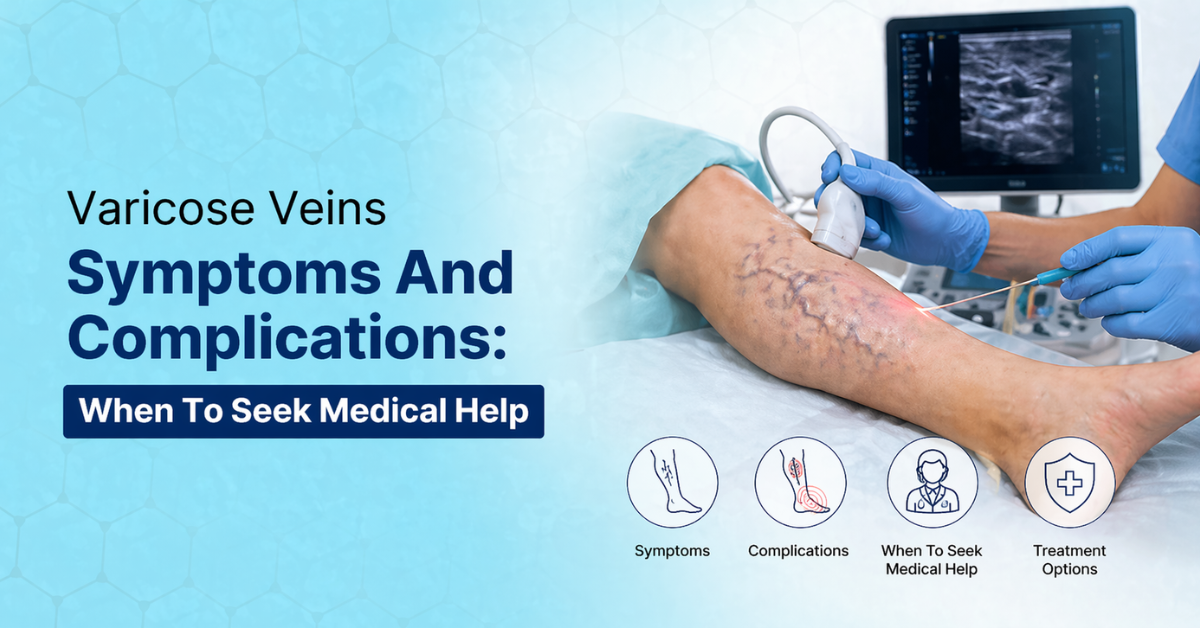
Varicose veins are enlarged, twisted veins that usually appear just beneath the surface of the skin, most commonly in the legs. They are often visible as raised, bulging lines that may look blue or purple in colour.
They develop when the valves inside the veins do not function properly. These valves are responsible for keeping blood flowing in one direction towards the heart. When they weaken, blood begins to collect in the veins instead of moving efficiently, causing increased pressure that leads to stretching and visible swelling of the veins.
Common Symptoms of Varicose Veins
Varicose veins often develop gradually, and the symptoms may not always be noticeable in the early stages. While some people initially observe only visible vein changes, others may begin to experience physical discomfort as circulation becomes affected. Understanding these symptoms can help you recognise when the condition is progressing.
1. Visible Changes In The Veins
The earliest signs are usually related to appearance. Veins may start to look more prominent and change in colour or shape.
- Bulging or slightly twisted veins
- Blue or purple discolouration under the skin
- Veins appearing more raised or visible over time
At this stage, they are often considered a cosmetic concern.
2. Mild Discomfort In The Legs
As blood flow becomes less efficient, you may begin to notice subtle physical sensations in the legs.
- A feeling of heaviness, especially after standing or sitting for long periods
- Mild aching or discomfort by the end of the day
- Slight swelling around the ankles
- Itching or irritation near the affected veins
These symptoms may be mild but often indicate early changes in circulation.
3. Worsening Or Persistent Symptoms
With progression, symptoms may become more frequent and may not improve easily with rest.
- Ongoing aching or throbbing in the legs
- Increased swelling in the lower legs
- A feeling of fatigue or tightness in the legs
This stage reflects increased pressure within the veins and reduced efficiency of blood flow.
4. Skin And Tissue Changes
In more advanced cases, the skin around the affected veins may begin to show visible changes.
- Dry or thinning skin
- Darkened or discoloured patches
- Irritation or inflammation resembling eczema
- Loss of hair
These signs suggest that the condition is affecting the surrounding tissues.
5. Night-Time Discomfort
Symptoms may also become noticeable during rest, particularly at night.
- Leg cramps or throbbing sensations
- Restlessness or discomfort that disrupts sleep
- Frequent need to move or adjust leg position for relief
Potential Complications of Untreated Varicose Veins
While not everyone will experience complications, it's helpful to understand what can happen if the condition progresses.
1. Venous Ulcers
These are wounds that develop due to prolonged pressure and poor circulation. They typically appear near the ankle and can take time to heal.
2. Superficial Thrombophlebitis
This involves inflammation in a vein close to the surface, sometimes with clot formation.
You may notice:
- Redness or warmth along the vein
- Tenderness or firmness in the area
3. Bleeding from Varicose Veins
Because varicose veins can sit close to the skin, they may occasionally bleed if injured.
This can become urgent if:
- Bleeding does not stop easily
- The vein is exposed or damaged
4. Deep Vein Thrombosis (DVT) - Rare but Serious
Although uncommon, more serious circulation issues can develop deeper in the veins.
The key difference is:
- Varicose veins affect surface veins
- DVT involves deeper veins and requires immediate medical attention&
How Varicose Veins Affect Your Daily Life
Varicose veins can gradually impact comfort and routine activities, especially as symptoms become more noticeable over time.
- Heaviness in the legs, especially after long periods of standing or sitting
- Mild to moderate aching that increases by the end of the day
- Swelling around the ankles or lower legs
- Feeling of fatigue in the legs even after limited activity
- Reduced comfort during walking, standing, or daily tasks
These changes may seem minor at first, but they can start to affect day-to-day activities if they continue. In such cases, exploring options like varicose veins treatment in Ahmedabad & can help in understanding the condition and managing it effectively.
How Symptoms Typically Progress Over Time
Understanding how varicose veins develop can help you recognise when things are changing.
|
Stage |
What You Might Notice |
What It May Indicate |
|
Early |
Visible veins, mild heaviness |
Circulation is beginning to slow |
|
Moderate |
Swelling, discomfort, skin irritation |
Increased pressure within the veins |
|
Advanced |
Skin changes, ulcers, persistent pain |
Long-term circulation problems |
This progression doesn't happen overnight, which is why early awareness is valuable.
Practical Steps You Can Take Before Medical Treatment
1. Lifestyle Adjustments That Make a Noticeable Difference
Simple daily habits can support better circulation.&
You can:
- Avoid staying in one position for long periods
- Take short breaks to move throughout the day
- Elevate your legs when resting
2. Compression and Support Options
Compression stockings are often recommended to help improve blood flow.
They work by:
- Applying gentle pressure to support circulation
- Reducing swelling and discomfort
- Helping your legs feel less heavy during the day
What to Expect When You Consult a Specialist
If you seek medical advice, the assessment process is usually straightforward and focused on understanding circulation and vein health.
A specialist may:
- Examine your legs physically
- Discuss your symptoms and daily routine
- Recommend an ultrasound scan to check blood flow
Treatment options may include monitoring, minimally invasive procedures, or other medical approaches, depending on severity. At centres specialising in interventional radiology, like Dev Hospital, evaluation is designed to identify the most suitable and effective treatment approach for each case.
Conclusion
Varicose veins are common, and in many cases, they begin as a minor concern. However, they don't always remain that way. Paying attention to how your symptoms develop and how your body feels over time can help you decide when it's appropriate to take the next step.
If something feels different, worsens gradually, or begins to affect your routine, it's worth getting clarity rather than waiting. A simple consultation can often provide reassurance or guide you towards the right treatment if needed.
FAQ
What are the signs that varicose veins are getting worse?
Search trends show people often ask about progression. Signs of worsening include increased swelling, more visible bulging veins, dull aching leg pain, skin darkening, and development of sores near the ankles. These changes suggest advancing venous disease and may require medical evaluation.
Are varicose veins dangerous or just a cosmetic problem?
This is one of the most searched questions. While many cases are harmless and cosmetic, varicose veins can sometimes lead to medical issues. In some people, they may cause pain, swelling, or progress into more serious conditions like ulcers or blood clots if ignored.&
Can varicose veins cause blood clots?
Yes, but not always. Many users search for this due to concerns about seriousness. Varicose veins can sometimes lead to superficial clots or, in rare cases, deeper vein clots (DVT), which require urgent medical attention. Symptoms include sudden pain, swelling, and redness in the leg.&
What complications can occur if varicose veins are left untreated?
Untreated varicose veins can lead to complications that people frequently search for:
- Painful leg ulcers (especially near the ankles)
- Chronic swelling
- Bleeding from the veins close to the skin
- Blood clots or vein inflammation
These complications are not very common but can become serious if ignored.
Are varicose veins ever an emergency?
In rare cases, yes. Seek immediate medical help if you notice:
- Sudden severe leg pain and swelling
- Bleeding from a vein
- Signs of infection (redness, warmth, fever)
- Symptoms of a blood clot
These could indicate serious complications that need urgent care
