There have been many discoveries in the world of medicine. Some serious and some not so serious looking conditions, however, it is essential to pay attention to any changes happening in and around your body. Early detection and careful execution can help flip the conditions. Talking about Varicose veins, these are not some mere cosmetic concern; sometimes they tend to showcase a deeper circulation problem in the legs.
When the veins fail to move blood efficiently from legs back to the heart, blood keeps on pooling in leg veins, pressure builds up inside them. Over time, this increased pressure can damage the surrounding skin and tissue.
One of the most serious complications of untreated varicose veins is the development of a venous or varicose vein ulcer. These ulcers often appear near the ankle or lower leg and can be painful, persistent, and difficult to heal.
In some patients, the wound remains open for months despite regular dressings and medications. The reason is simple: unless the underlying vein problem is treated, that is unless the blood circulation in leg is improved, the ulcer keeps returning or refuses to heal. This article explains how a patient with a chronic leg ulcer found relief after receiving advanced varicose vein treatment at Dev Hospital of Vascular and Interventional Radiology.
What is a Varicose Vein Ulcer?
A varicose vein ulcer is an issue of an open wound that develops due to poor blood circulation in the leg veins. It usually appears around the ankle area and is commonly associated with long-standing varicose veins.
Healthy veins contain valves that ensure blood flows upward toward the heart. When these valves become weak or damaged, blood begins to flow backwards and pool inside the veins. This condition is known as chronic venous insufficiency.
Over time, this pooling of blood increases pressure in the veins, which affects the surrounding skin and tissues. The skin becomes fragile, inflamed, and eventually breaks down, forming an ulcer.
Common symptoms of varicose vein ulcers include:
- Swelling in the lower leg
- Darkening or discolouration of the skin near the ankle
- Persistent itching or irritation
- Pain or heaviness in the leg
- A wound that does not heal for weeks or months
- And sometimes carcinoma can develop on chronic ulcer
Without proper treatment, these ulcers can worsen and significantly affect a person's quality of life.
When a Leg Ulcer Would Not Heal
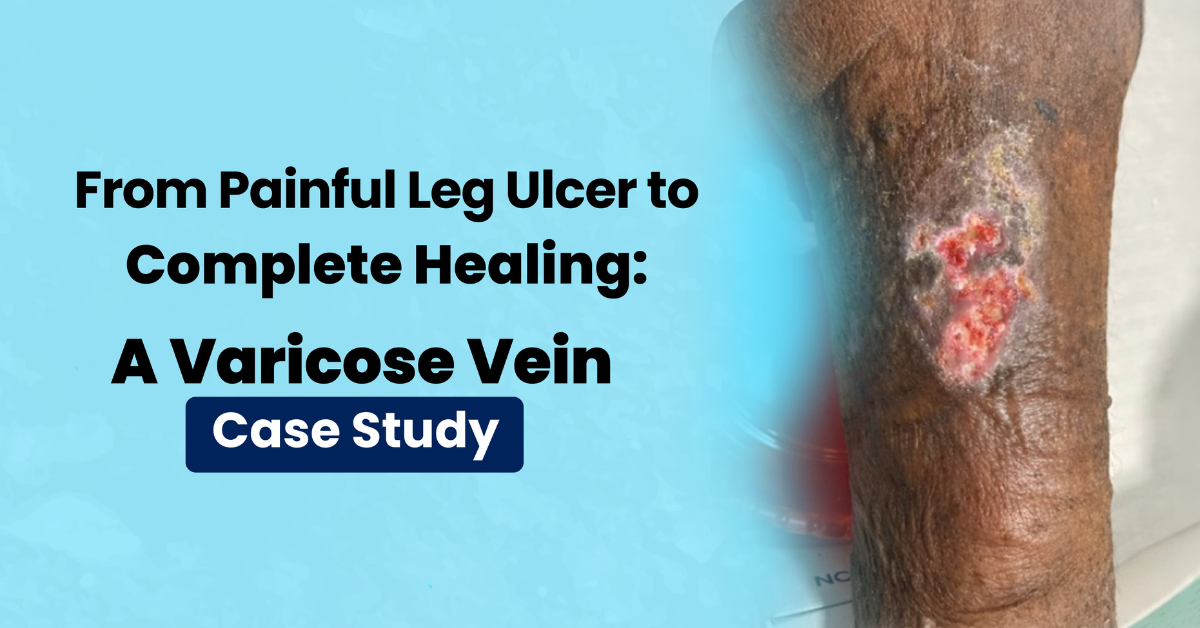
A 47-year-old male working as a conductor visited the hospital with a persistent wound on his left leg. The ulcer had been present for nearly two months and was not responding to routine wound care.
The patient reported ongoing discomfort, swelling around the affected area, and difficulty performing daily activities due to the pain and irritation caused by the ulcer.
Despite repeated dressings, the wound continued to remain open. This raised suspicion that the ulcer might be related to underlying venous disease, particularly varicose veins.
Further evaluation was required to understand the root cause.
Looking Deeper: Diagnosis Through Vascular Imaging
To identify the exact cause of the non-healing ulcer, the patient underwent a Colour Doppler ultrasound, an imaging test used to evaluate blood flow in the veins.
The investigation revealed two important findings:
- Sapheno-femoral junction incompetence
- Multiple perforator vein incompetence
In simple terms, the valves in the major veins of the leg were not functioning properly. Instead of directing blood upward, they allowed blood to flow backward and accumulate in the lower leg. This abnormal circulation led to increased pressure in the veins and eventually caused the ulcer.
The diagnosis confirmed that the patient was suffering from chronic venous insufficiency, which required targeted treatment to correct the underlying vein problem.
A Modern Approach to Treating Varicose Veins
Once the cause was identified, a minimally invasive treatment plan was designed to address the abnormal veins responsible for the ulcer.
The treatment involved three key procedures.
Laser Ablation of the Great Saphenous Vein
Laser ablation is a modern technique used to treat varicose veins without major surgery. A thin laser fiber is inserted into the affected vein, and controlled laser energy is delivered to close the vein from within.
In this case, the Great Saphenous Vein (GSV), which was allowing abnormal blood flow, was treated using this method.
Closing the faulty vein redirected blood flow into healthy veins, improving circulation in the leg.
Treatment of Incompetent Perforator Veins
Perforator veins connect the superficial veins with deeper veins in the leg. When these veins become incompetent, they allow blood to flow backwards and increase venous pressure. The problematic perforator veins were treated with laser to prevent this backward flow and restore proper circulation.
Sclerotherapy for Varicose Veins
Sclerotherapy was also used to treat varicosities. In this procedure, a special medical solution is injected into the affected veins, causing them to close and gradually fade away.
Together, these treatments addressed the root cause of the venous ulcer rather than just treating the wound itself. The procedures were minimally invasive, required no large surgical cuts, and allowed faster recovery for the patient.
Supporting the Healing Process
After the procedures were completed, proper wound care was continued to support the healing process.
The patient underwent the following:
- Regular four layer ulcer dressings once a week
- Continuous monitoring of healing progress
- Supportive measures to improve circulation
As the underlying venous pressure was corrected, the body’s natural healing process began to take effect.
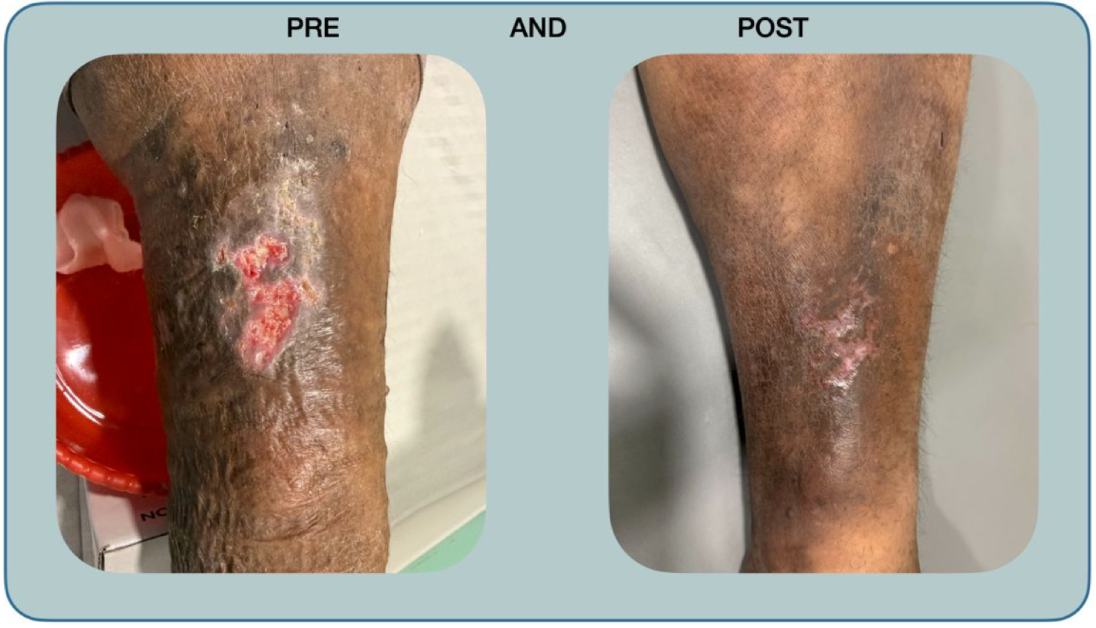
Within four weeks, significant improvement in the ulcer was observed.
Visible Improvement in the Ulcer
Before treatment, the patient’s condition included:
- An open wound on the lower leg
- Inflamed and irritated skin
- Severe discoloration around the ulcer
As the circulation improved following treatment, the wound gradually began to close.
After a few weeks:
- The ulcer showed significant healing
- Skin inflammation reduced
- Swelling and pain improved
- The surrounding skin condition became healthier
This case highlights an important medical fact: healing a venous ulcer requires treating the underlying vein disease.
Simply applying dressings without addressing the circulation problem often leads to delayed healing or recurrence.
Why Varicose Vein Ulcers Should Not Be Ignored
Varicose vein ulcers are a serious condition and should never be ignored.
If left untreated, they may lead to complicationcs such as:
- Chronic infection
- Persistent pain and discomfort
- Recurrent ulcers
- Long-term skin damage
Early diagnosis using vascular imaging and timely treatment can prevent these complications.
Modern minimally invasive treatments now allow doctors to correct vein problems effectively with shorter recovery times.
Expert Care From Vascular Specialists
Advanced treatments for venous disease require specialized expertise.
At Dev Hospital of Vascular and Interventional Radiology, patients receive care from experienced vascular specialists including:
Dr. Milan Jolapara (MD, DM): Vascular and Interventional Radiology Specialist with expertise in minimally invasive treatments for vascular disorders, including varicose veins, venous ulcers, and peripheral vascular disease.
Dr. Trupti Mehta (MD, FVIR): Interventional Radiologist specializing in modern image-guided procedures for vascular conditions and minimally invasive vein treatments.
Their approach focuses on identifying the underlying cause of venous disease and providing targeted treatment that promotes faster healing and long-term relief.
When Should You See a Vascular Specialist?
Many people ignore early signs of venous disease until complications develop.
You should consider consulting a vascular specialist if you experience:
- Persistent leg swelling
- Visible varicose veins
- Skin darkening around the ankle
- Burning or itching sensations in the leg
- A wound that does not heal within a few weeks
Early treatment can prevent the development of ulcers and other serious complications.
Book a Consultation With Our Experts
If you are experiencing varicose veins, leg swelling, or a non-healing leg wound, timely evaluation is important.
The specialists at Dev Hospital of Vascular and Interventional Radiology offer advanced minimally invasive treatments designed to correct the underlying cause and promote lasting recovery.
Consultation with a vascular specialist can help you understand your condition and explore the most effective treatment options available.
