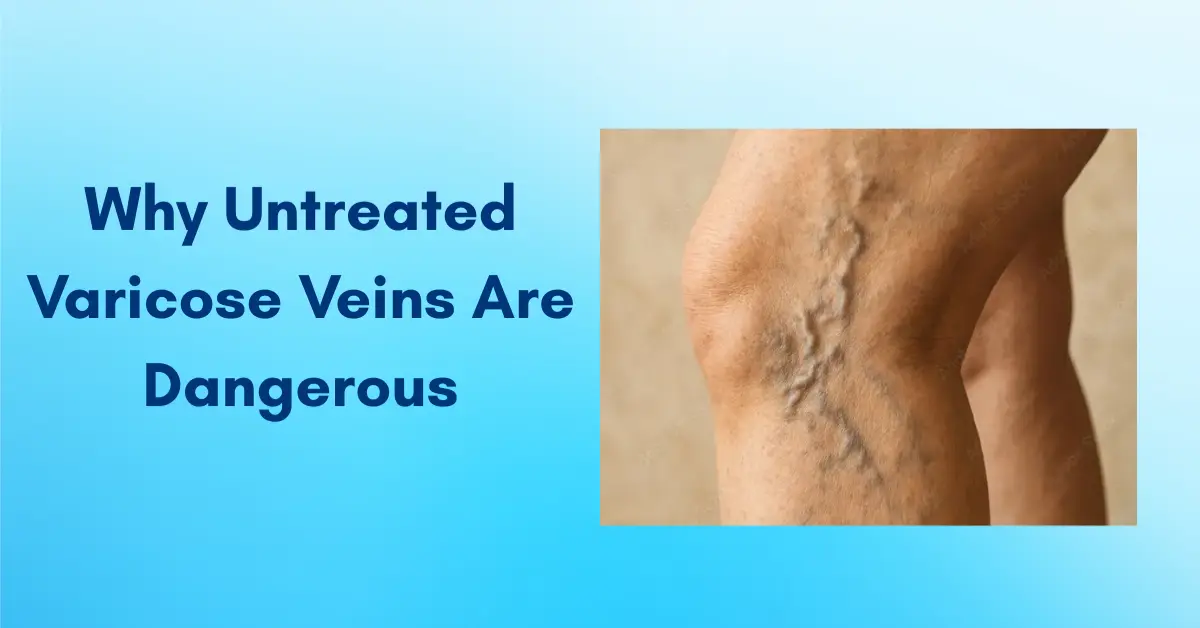
You may have noticed visible veins on your legs and brushed them off as a minor cosmetic concern. It’s something many people do, especially when there’s no immediate pain or disruption to daily life.
Varicose veins are often a sign that your veins are not functioning as efficiently as they should. Over time, this can affect how blood circulates in your legs. If left unaddressed, what starts as a visual issue can gradually turn into something that impacts your comfort, mobility, and overall health. Understanding this early can help you decide when to explore the right care and treatment options.
How Varicose Veins Become Dangerous Over Time
Varicose veins rarely become severe overnight. Instead, they progress slowly, which is why they are often ignored in the early stages.
- The valves inside your veins begin to weaken or stop working properly
- Blood starts to collect in legs instead of flowing smoothly upwards
- This creates pressure within the veins
- Over time, the vein walls stretch and lose their strength and become dilated
- You may begin to feel heaviness or fatigue in your legs
- Gradually veins start leaking causing edema and swelling in legs
- Over the time skin changes start occurring in form of hair loss and blackening of skin
- Finally skin breaks down leading to ulcer formation. And this ulcer does not heal due to lack of proper blood circulation.
Many people only consider seeking varicose veins treatment in Ahmedabad once symptoms begin to interfere with routine activities, but early attention can help prevent this progression.
Major Health Risks of Untreated Varicose Veins
As varicose veins progress, the impact is not limited to how your legs look; it gradually begins to affect how they feel and function in your everyday life. What starts as mild discomfort can slowly turn into persistent issues that interfere with routine activities.
Chronic Pain and Discomfort
One of the earliest changes you may notice is a constant heaviness in your legs. You may feel heaviness or aching in the legs, especially after long periods of standing.
- You may experience aching that builds up as the day goes on
- A burning or throbbing sensation can develop, especially after standing for long hours
- The discomfort often eases slightly with rest, but tends to return again
Swelling (Oedema)
As circulation becomes less efficient, fluid can begin to collect in your lower legs.
- Swelling is usually more noticeable around the ankles
- Your shoes may feel tighter by the evening
- The legs can feel heavy, stretched, or uncomfortable after a full day
Skin Changes and Damage
Over time, reduced blood flow starts affecting the health of your skin.
- The skin may appear darker or blackened or uneven in colour
- You might notice dryness, hair loss, itching, or irritation in certain areas
- In some cases, the skin can become thicker or feel slightly hardened
These changes are often a sign that the condition is progressing beyond the early stage.
Venous Ulcers (Open Sores)
If left untreated, the pressure in the veins can eventually lead to skin breakdown.
- Small wounds may develop, usually near the ankle area
- These sores tend to heal very slowly
- They can become painful and may interfere with daily comfort
Without proper care, there is also a risk of infection.
Blood Clots
Varicose veins can sometimes lead to clot formation in affected veins.
- You may notice redness, warmth, or tenderness in a specific area
- The leg may feel more painful than usual
- In some cases, swelling can increase suddenly
These symptoms should be evaluated by a medical professional.
Bleeding Risk
As veins become enlarged and closer to the skin surface, they also become more fragile.
- Even a minor bump or scratch can cause bleeding
- The bleeding may appear more than expected due to pressure in the veins
- It can be difficult to control without proper care
Understanding these risks helps you recognize that varicose veins are more than just a visual concern. Paying attention to these changes early can make a meaningful difference in how the condition is managed.
Warning Signs You Should NOT Ignore
Your body often gives early signals before the condition becomes more serious. Paying attention to these signs can help you take timely action and avoid complications.
- Persistent heaviness or aching in your legs
- Swelling that does not settle even after rest
- Changes in skin colour or texture
- Itching or irritation around visible veins
- Open sores or slow-healing wounds
- Sudden increase in vein size or discomfort
- Any unusual bleeding or tenderness
If you’re noticing any of these symptoms, it may indicate that the condition is progressing. Consulting specialists at the right time can help you understand your condition better and take the necessary steps before it leads to more serious complications.
How Early Treatment Helps Prevent Complications
You may not feel the need to act when symptoms are mild, but this is usually the stage where simple steps can make the biggest difference. Addressing the condition early can help you stay comfortable and avoid it turning into something more difficult to manage later.
Lifestyle Support
In the early stages, small changes in your daily routine can help reduce strain on your veins:
- Regular movement: Walking helps keep blood circulating instead of settling in the veins
- Leg elevation: Raising your legs for short periods can relieve pressure and reduce heaviness
- Compression stockings: These support blood flow and can ease swelling by the end of the day
Medical Treatment Options
If symptoms continue or begin to worsen, targeted treatments can help manage the condition effectively:
- Laser-based procedures: Help close affected veins so blood flows through healthier ones
- Sclerotherapy: Works well for smaller veins by blocking it and hence gradually reducing their appearance
- Minimally invasive techniques: Designed to treat the issue with less discomfort and quicker recovery
Conclusion
Varicose veins may seem harmless at first, but if left untreated, they can lead to complications that affect both comfort and long-term health. However, over time, they can develop into a condition that affects not just how your legs look but how they feel and function in your daily life. Recognizing the early signs and understanding the risks can help you take timely action before the condition progresses.
If you’ve started noticing symptoms or changes in your legs, it’s worth addressing them sooner rather than later. At Dev Hospital, patients are assessed to understand the condition and explore appropriate treatment options based on individual needs.
Frequently Asked Questions
Can untreated varicose veins lead to serious conditions like DVT?
In some cases, long-standing varicose veins may slightly increase the risk of blood clots forming in the superficial veins. While not every case leads to deep vein thrombosis (DVT), it should not be ignored. Sudden swelling, pain, warmth, or redness in one leg needs immediate medical attention.
Can sitting or standing for long hours make varicose veins worse?
Yes. Long periods of sitting or standing reduce proper blood flow in the legs, increasing pressure in superficial veins. Over time, this can worsen existing varicose veins and lead to symptoms like heaviness, swelling, and visible vein enlargement.
Can exercise help with varicose veins?
Yes, regular exercise such as walking, cycling, or leg movement helps improve circulation and reduce discomfort. However, exercise cannot remove existing varicose veins. It mainly helps slow progression and supports overall vein health.
