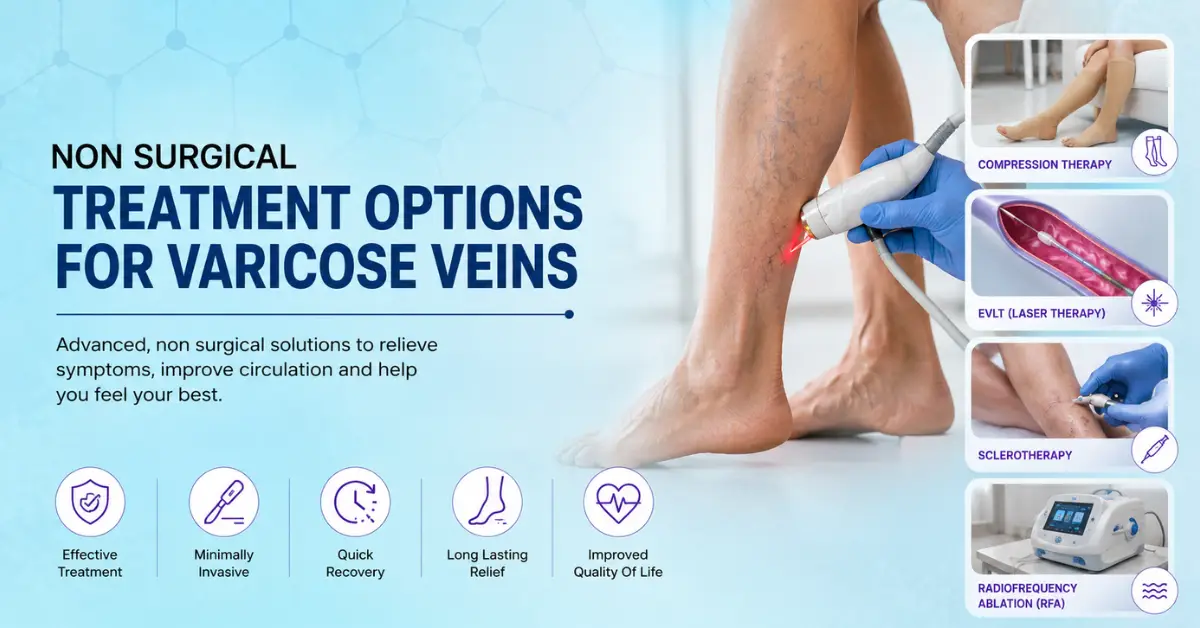
Varicose veins are swollen, twisted veins that usually appear on the legs. They happen when the valves in your veins become weak, causing reflux of blood in leg veins. While surgery is an option, many people today prefer non-surgical treatments that are simple, effective, and require little to no downtime.
In this article, we’ll look at the most common non-surgical treatments for varicose veins, how they work, and when they might be recommended.
Below are the most reliable non-surgical treatment options available today.
1. Compression Therapy (First-Line Management)
Compression therapy is usually the first step in treating varicose veins, especially in mild to moderate cases.
How it works
Compression stockings gently squeeze your legs and hence superficial veins so that when you stand up, blood does not flow back and distend superficial veins. Thus, it helps your veins move blood more easily back toward your heart. This can reduce swelling, ease discomfort, and prevent blood from collecting in your leg veins.
Key benefits
- Reduces leg swelling and heaviness
- Improves circulation
- Helps prevent progression of varicose veins
- Supports recovery after other treatments
Limitations
- Does not eliminate existing varicose veins
- Requires consistent daily use for effectiveness
In early cases of varicose veins, doctors often recommend using compression therapy for about 3 to 6 months before moving on to more advanced treatments.
2. Sclerotherapy
Sclerotherapy is one of the most common non-surgical treatments, especially for smaller varicose veins and spider veins.
How it works
A medical solution (sclerosant) is injected directly into the affected vein, which damages the endothelium of veins, thus causing the vein walls to collapse and seal shut. The body then naturally reroutes blood through healthier veins, and the treated vein gradually fades.
Types of sclerotherapy
|
Type |
Description |
|
Liquid sclerotherapy |
Used for small veins |
|
Foam sclerotherapy |
More suitable for medium-sized veins |
Key benefits
- Quick outpatient procedure
- No need for anesthesia
- Beneficial for both cosmetic and symptomatic relief
- Minimal downtime
Considerations
- Multiple sessions may be required
- Mild side effects such as swelling or itching can occur
- It not treat reflux
3. Endovenous Laser Treatment (EVLT)
Endovenous Laser Treatment (EVLT), also known as laser ablation, is widely used for treating larger varicose veins without surgery.
How it works
A thin catheter is inserted into the vein, and laser energy is applied to heat and close the damaged vein. Over time, the vein is absorbed by the body, and blood flow is redirected to healthy veins.
Key benefits
- Minimally invasive with a small incision
- No scars
- High success rate for larger veins
- Same-day discharge
Recovery
- Patients are encouraged to walk soon after the procedure
- Normal activities can usually resume quickly
4. Radiofrequency Ablation (RFA)
Radiofrequency Ablation is another catheter-based treatment similar to EVLT but uses radiofrequency energy instead of laser heat.
How it works
A catheter delivers controlled heat to the vein walls, causing them to collapse and seal.
Limitations
- Recanalization rate is higher than EVLT
5. Lifestyle Modifications (Supportive Approach)
Although not a direct treatment, lifestyle changes play an important role in managing symptoms and preventing worsening of varicose veins.
Recommended changes
- Regular exercise such as walking
- Elevating legs to improve circulation
- Avoiding prolonged standing or sitting
- Maintaining a healthy weight
Impact
Lifestyle adjustments help reduce discomfort and slow disease progression but do not remove existing veins.
For a more detailed guide, you can also explore our blog on lifestyle changes and home remedies to prevent varicose veins, which explains practical steps in depth.
Comparison of Non-Surgical Treatments
|
Treatment Option |
Best For |
Invasiveness |
Downtime |
Effectiveness |
|
Compression Therapy |
Early-stage symptoms |
None |
None |
Symptom control only |
|
Sclerotherapy |
Small to medium veins |
Minimally invasive |
Minimal |
High for small veins |
|
EVLT |
Larger veins |
Minimally invasive |
Very low |
Very high |
|
RFA |
Medium veins |
Minimally invasive |
Very low |
High |
|
Lifestyle modifications |
Prevention |
None |
None |
Symptom control only |
Choosing the Right Treatment
The choice of treatment depends on several factors:
- Size and severity of varicose veins
- Symptoms such as pain or swelling
- Cosmetic concerns
- Overall health condition
In many cases, a combination of treatments (for example, sclerotherapy with laser therapy) may be recommended for optimal results.
Final Thoughts
Non-surgical treatments for varicose veins have advanced significantly, offering safe, effective, and convenient alternatives to traditional surgery. From compression therapy to advanced techniques like EVLT and RFA, patients now have multiple options tailored to their condition and comfort.
If you are experiencing symptoms such as leg pain, swelling, or visible veins, seeking timely medical advice is essential. At Dev Hospital, patients can receive a thorough evaluation and a personalized treatment plan based on the severity of their condition.
Consult a vascular specialist today to explore the most suitable non-surgical treatment option and prevent further complications. Early intervention can significantly improve both comfort and long-term vein health.
Frequently Asked Questions (FAQs)
- What is the best non-surgical treatment for varicose veins?
The best treatment depends on the severity. Compression therapy works for mild cases, while sclerotherapy, EVLT or RFA are more effective for medium or larger and symptomatic veins. - Can varicose veins be treated without surgery?
Yes, the majority of cases can be treated with non-surgical options like compression stockings, sclerotherapy, laser treatment, or radiofrequency ablation. - Do non-surgical treatments permanently remove varicose veins?
Effectiveness of non-surgical treatment is the same as surgery. It will permanently close treated veins. but like after surgery or after non-surgical treatment, also new varicose veins may develop over time. - Is there any downtime after non-surgical treatments?
Most treatments have little to no downtime, and patients can usually return to normal activities quickly, usually from the next day. - Are non-surgical treatments for varicose veins safe?
Yes, these treatments are generally safe, minimally invasive, and widely used with a very low risk of complications.
