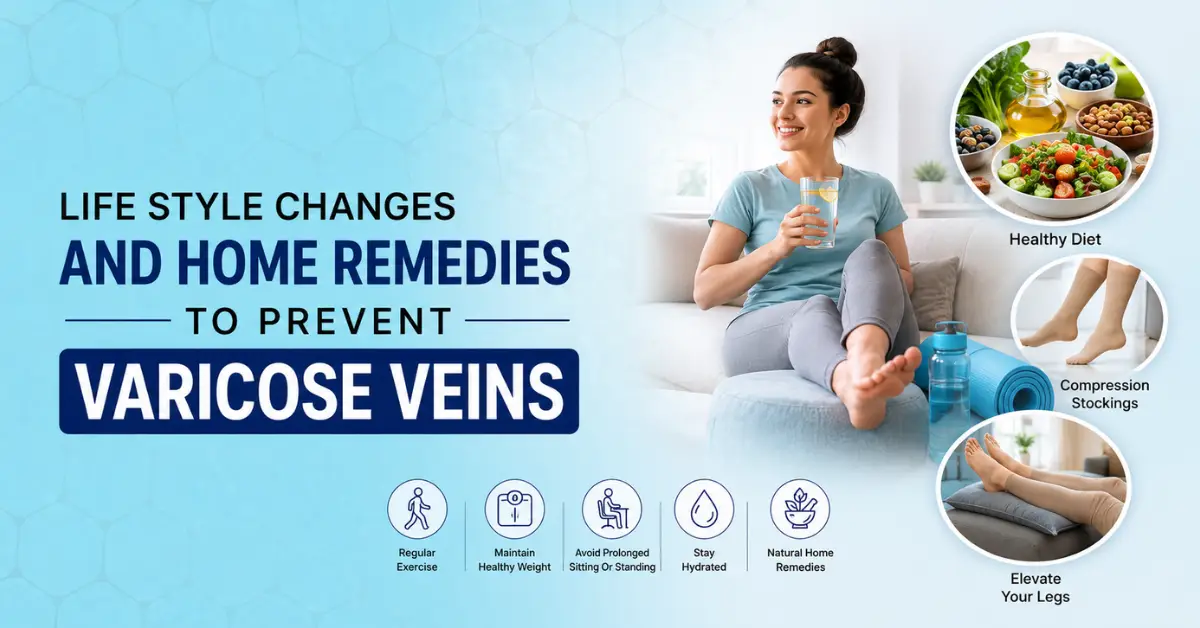
Varicose veins are very common and affect millions of people around the world. They usually show up as swollen, twisted veins on the legs and can make your legs feel heavy, uncomfortable, or even painful. While there are medical treatments available, in many cases, the risk and symptoms can be managed through appropriate lifestyle measures.
This article outlines practical lifestyle measures that can help reduce the risk of developing varicose veins.
What Causes Varicose Veins?
Varicose veins happen when the tiny valves inside your veins become weak or don’t work properly. These valves help push blood in the right direction—back up toward your heart. When they stop working as they should, blood can start to flow backwards and collect in the veins instead of flowing towards the heart. This causes the veins to swell, stretch, and become more visible under the skin.
Common risk factors include:
- Prolonged standing or sitting
- Lack of physical activity
- Obesity
- Pregnancy
- Aging
- Family history
Understanding these causes helps you take preventive steps early. For a better understanding of the condition, you can also Explore our blog on What is Varicose Veins.
Why Lifestyle Changes Matter
Your everyday habits have a big impact on how well your blood circulates. Small, simple changes in your routine can take pressure off your veins, help blood flow more smoothly, and keep the condition from getting worse.
Let’s explore the most effective lifestyle changes.
1. Stay Physically Active
Regular exercise is one of the easiest and most effective ways to keep blood flowing well in your legs. It helps strengthen your calf muscles, which work like a natural pump to push blood back up toward your heart.
Recommended activities:
- Walking
- Cycling
- Swimming
- Yoga
Even 30 minutes of moderate exercise daily can make a noticeable difference.
2. Maintain a Healthy Weight
Carrying extra weight puts more pressure on your veins, especially in your legs. Even losing a small amount of weight can help take that pressure off and improve your blood circulation.
Tips to manage weight:
- Eat balanced meals
- Avoid processed foods
- Stay consistent with physical activity
3. Avoid Prolonged Sitting or Standing
Staying in the same position for too long can slow down your blood flow and put extra pressure on your veins.
Simple habits to adopt:
- Take a break every 30–60 minutes
- Stretch your legs frequently
- Walk around whenever possible
If your job requires long hours of sitting or standing, these small changes can significantly reduce your risk.
4. Elevate Your Legs
Raising your legs above heart level helps blood flow more easily back toward the heart, reducing swelling and discomfort.
How to do it:
- Lie down and elevate your legs using pillows
- Do this for 15–20 minutes, 2–3 times a day
This is especially helpful after a long day on your feet.
5. Wear Compression Stockings
Wearing compression stockings gently squeeze your legs and superficial veins, so when we stand up blood does not back flow in them, thus preventing bulging of veins and leg edema.
Benefits of Compression Stockings
|
Benefit |
Description |
|
Improved circulation |
Helps blood flow upward toward the heart |
|
Reduced swelling |
Minimizes fluid buildup in the legs |
|
Less discomfort |
Relieves heaviness and fatigue |
They are particularly useful for people who stand or sit for long periods.
6. Choose Comfortable Clothing and Footwear
Wearing tight clothes, especially around your waist, groin, or legs, can slow down your blood flow and make it harder for blood to move properly.
Better choices:
- Loose-fitting clothes
- Low-heeled shoes (they improve calf muscle function)
Try not to wear high heels for long periods, as they can affect proper blood circulation in your legs.
7. Follow a Vein-Friendly Diet
Your diet plays an important role in maintaining vein health.
Foods That Support Healthy Veins
|
Nutrient |
Food Sources |
Benefits |
|
Fiber |
Whole grains, fruits, vegetables |
Prevents constipation, reducing vein pressure |
|
Flavonoids |
Citrus fruits, berries, spinach |
Improves blood circulation |
|
Potassium |
Bananas, sweet potatoes |
Reduces water retention |
|
Water |
Adequate hydration |
Prevents blood thickening |
Cutting back on salt is also important because too much sodium can cause your body to hold on to extra water, leading to swelling.
8. Avoid Smoking and Limit Alcohol
Smoking can damage your blood vessels and slow down circulation, which increases the risk of vein problems. Drinking too much alcohol can also dehydrate your body and affect your blood flow.
Adopting healthier lifestyle habits can support vein health over time.
Effective Home Remedies for Varicose Veins
While home remedies cannot eliminate varicose veins, they can help reduce symptoms like swelling, pain, and heaviness.
1. Gentle Leg Massage
Massaging your legs can help improve circulation and reduce discomfort.
How to do it:
- Use gentle upward strokes
- Avoid applying too much pressure directly on the veins
- Use natural oils like coconut or olive oil
2. Cold Compress
Applying a cold compress can reduce swelling and soothe discomfort.
Steps:
- Wrap ice in a cloth
- Apply to affected areas for 10–15 minutes
3. Compression stockings
Wearing compression stockings throughout the day helps to prevent swelling of legs and complications of varicose veins.
Steps:
- Wear stockings before getting out of the bed.
- Keep wearing stockings throughout the day.
- Only remove it when you lie down in bed.
4. Elevation While Sleeping
Placing a pillow under your legs while sleeping helps maintain better circulation overnight.
Quick Daily Routine for Prevention
Here’s a simple routine you can follow:
- Morning: Light stretching or walking
- Daytime: Take breaks from sitting/standing
- Evening: Elevate legs for 15–20 minutes
- Night: Stay hydrated and maintain a healthy diet
Consistency is key to seeing long-term benefits.
When to Seek Medical Advice
While lifestyle changes and home remedies are helpful, you should consult a vascular specialist for proper evaluation if you experience:
- Persistent pain or swelling
- Skin discoloration
- Ulcers near the ankles
- Bleeding from veins
Early diagnosis can prevent complications and improve outcomes.
At Dev Hospital, patients undergo detailed evaluation to assess the condition and determine appropriate preventive or treatment options.
Conclusion
Preventing varicose veins mostly comes down to building healthy daily habits. Staying active, eating a balanced diet, drinking enough water, and even simple things like raising your legs can help improve blood flow and lower your risk.
Home remedies can help ease symptoms, but they work best when combined with consistent lifestyle changes. Taking small steps today can help you avoid discomfort and keep your veins healthier in the long run.
Take the Next Step
If you’re experiencing symptoms of varicose veins and want expert guidance on prevention and treatment, don’t ignore the signs. Consult a qualified healthcare professional to understand the best approach for your condition and ensure long-term vascular health.
Frequently Asked Questions (FAQs)
- Can varicose veins go away with lifestyle changes?
No, lifestyle changes cannot completely remove existing varicose veins. However, they can help reduce symptoms like pain and swelling, improve blood circulation, and prevent the condition from getting worse. - What is the best exercise for preventing varicose veins?
Low-impact activities like walking, swimming, cycling, and yoga are highly effective. These exercises improve blood flow and strengthen calf muscles, which help push blood back toward the heart. - Are compression stockings really helpful?
Yes, compression stockings are one of the most effective non-surgical ways to manage varicose veins. They improve circulation, reduce swelling, and relieve discomfort, especially for people who sit or stand for long periods. - When should I see a doctor for varicose veins?
You should consult a healthcare professional if you experience persistent pain, swelling, skin discoloration, ulcers, or bleeding from veins. Early diagnosis can help prevent complications and improve treatment outcomes. - Do home remedies like cold compress or massage work?
Home remedies can help relieve symptoms such as heaviness and swelling, but they do not treat the root cause of varicose veins. They work best when combined with proper lifestyle changes and medical guidance if needed.
