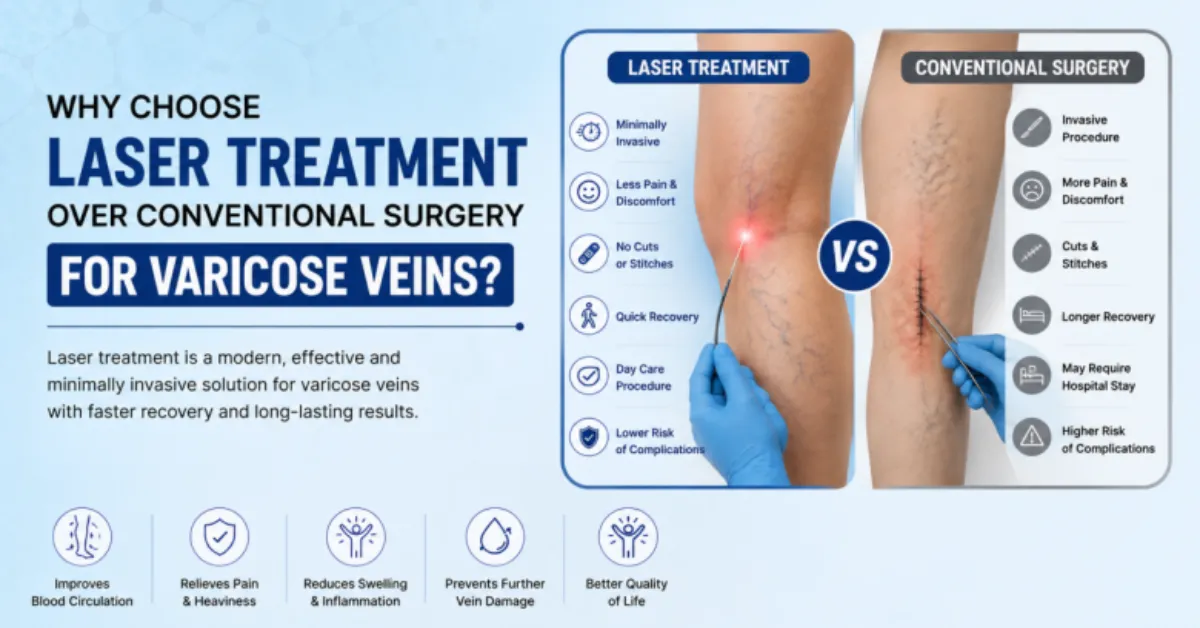
Varicose veins are a common vascular condition that affects millions of people worldwide. Characterized by swollen, twisted, and enlarged veins, they most commonly appear on the legs and can cause discomfort, heaviness, swelling, and cosmetic concerns. While traditional surgery was once the standard treatment, advances in medical technology have introduced minimally invasive alternatives that offer faster recovery and improved patient comfort.
If you're considering treatment options, understanding the differences between laser procedures and traditional surgery can help you make a more informed decision.
Understanding Varicose Veins
Varicose veins develop when vein valves become weak or damaged, allowing blood to pool instead of flowing efficiently back to the heart. Over time, the veins enlarge and become visible beneath the skin.
Common symptoms include:
- Aching or heavy legs
- Swelling around the ankles
- Burning or throbbing sensations
- Night cramps
- Visible bulging veins
- Skin discoloration and ulcers in severe cases
Seeking timely Varicose Veins Treatment in Ahmedabad can help prevent complications and improve quality of life.
What is Laser Treatment for Varicose Veins?
Laser treatment for varicose veins uses targeted laser energy to close damaged veins without physically removing them.
The procedure involves inserting a thin laser fiber into the affected vein. Heat generated by the laser seals the vein, allowing blood to naturally reroute through healthier veins.
Over time, the treated vein is absorbed by the body. This technique is commonly known as Endovenous Laser Treatment (EVLT) and has become one of the most widely used modern solutions for varicose veins.
Traditional Surgery for Varicose Veins
Conventional surgical treatment typically involves vein stripping or ligation. During this procedure, affected veins are tied off and removed through small incisions.
Advantages of Traditional Surgery
- Proven treatment history
- Effective for severe vein conditions
- Suitable for complex cases
Limitations
- Requires larger incisions
- Longer recovery period
- Greater post-operative discomfort
- Higher risk of bruising and scarring
- Usually requires hospital admission and general anaesthesia
- Higher rate of recurrence from neovascularisation at the groin compared with endovenous techniques
Laser Treatment vs Conventional Surgery
Comparison at a Glance
|
Feature |
Laser Treatment |
Traditional Surgery |
|
Incisions |
Minimal |
Multiple incisions |
|
Pain Level |
Lower |
Moderate to high |
|
Hospital Stay |
Usually day-care |
Often requires admission |
|
Recovery Time |
Faster |
Longer |
|
Scarring |
Minimal |
More noticeable |
|
Return to Work |
Within days |
Several weeks |
Benefits of Choosing Laser Treatment
1. Minimally Invasive Procedure
One of the biggest advantages is that laser treatment does not require extensive surgical cuts.
Benefits include:
- Smaller entry points
- Reduced tissue trauma
- Less bleeding
- Lower infection risk
Patients experience significantly less disruption compared to traditional surgery.
2. Faster Recovery
Most patients can resume daily activities within a few days after treatment.
Unlike conventional surgery, which may require extended rest, laser procedures allow:
- Quicker mobility
- Reduced downtime
- Faster return to work
For working professionals and active individuals, this is a major advantage.
3. Less Pain and Discomfort
Because laser treatment is less invasive, patients generally experience:
- Less post-procedure pain
- Reduced swelling
- Minimal bruising
Pain management requirements are often lower compared to surgical recovery.
4. Better Cosmetic Results
Many patients seek treatment due to both medical symptoms and appearance concerns.
Laser treatment offers:
- Minimal scarring
- Improved cosmetic outcomes
- Less visible treatment marks
This makes it particularly appealing for younger patients and those concerned about aesthetics.
5. High Success Rates
Clinical studies have shown excellent long-term success rates for laser treatment when performed by experienced specialists. When carried out by a qualified varicose veins specialist in Ahmedabad, laser therapy provides durable symptom relief and improved circulation.
When Conventional Surgery Is Still the Better Choice
Laser is not universally superior, and any specialist who tells you otherwise is overselling. Surgery may remain the better option when:
- The vein is very large, extremely tortuous or lies immediately beneath the skin, where heat could damage the skin
- There is a known allergy or contraindication to tumescent local anesthetic.
- Recurrent varicose veins arise from a complex groin network
- Very superficial tributaries need direct removal—often combined with laser as a hybrid procedure
In practice, many patients today receive a combination—laser to close the main refluxing trunk, plus phlebectomy or sclerotherapy for the visible surface veins. The right answer comes from your Doppler scan, not from a preference for one technology.
Who is a Suitable Candidate?
Laser treatment may be recommended for patients who:
- Have symptomatic varicose veins
- Experience leg heaviness or pain
- Have visible vein enlargement
- Want a minimally invasive solution
- Prefer quicker recovery
It may not be suitable if you are pregnant, have an active DVT, have significant peripheral arterial disease, or are unable to mobilise after the procedure.
Every case is different. A detailed vascular evaluation determines the most appropriate approach.
The Importance of Specialist Evaluation:
Successful treatment depends on accurate diagnosis and planning.
- Clinical examination
- Doppler ultrasound assessment
- Vein mapping
- Treatment planning
This ensures the underlying cause of the vein problem is addressed rather than just the visible bulge. An experienced vascular surgeon in Ahmedabadwill not recommend a procedure without a scan first.
Are There Any Risks?
Like any medical procedure, laser treatment carries some risks, although complications are generally uncommon.
Potential side effects may include:
- Mild bruising
- Temporary discomfort
- Minor skin irritation
- Rare nerve irritation
Most side effects resolve quickly with proper post-treatment care.
Recovery After Laser Treatment
Recovery guidelines usually include:
|
Recommendation |
Purpose |
|
Walking regularly |
Improve circulation |
|
Wearing compression stockings |
Support healing |
|
Avoiding prolonged standing |
Reduce vein pressure |
|
Attending follow-up visits |
Monitor progress |
Most patients notice improvement in symptoms within weeks. Modern healthcare increasingly focuses on treatments that minimize disruption to patients' lives. The rise of minimally invasive procedures has transformed vascular care. Today, many people seeking varicose vein treatment doctors prefer options that combine effectiveness with comfort and convenience. This shift has contributed to the growing popularity of laser procedures across India.
Final Thoughts
While conventional surgery continues to have a role in certain complex cases, laser treatment for varicose veins offers significant advantages for many patients. Faster recovery, minimal scarring, reduced discomfort, and excellent clinical outcomes make it an attractive alternative to traditional surgical methods.
If you are experiencing symptoms of varicose veins, consulting an experienced vascular surgeon Ahmedabad can help determine the most suitable treatment option for your condition. Early diagnosis and timely treatment not only improve appearance but also help prevent long-term complications, allowing you to return to a healthier and more active lifestyle.
Not sure whether laser or surgery is right for you? Our vascular team at Dev Hospital provides Doppler evaluation and the full range of minimally invasive vein treatments — EVLT, RFA, VenaSeal, and sclerotherapy — as daycare procedures in Ahmedabad. Book your consultation today.
This article is for general information only and is not a substitute for professional medical advice, diagnosis, or treatment. Outcomes vary between individuals, and no result is guaranteed. Always consult a qualified vascular specialist to discuss which treatment is appropriate for your condition.
