Varicose veins are more than a cosmetic concern. They can cause leg heaviness, swelling, discomfort, cramps, and fatigue, affecting everyday life. While medical treatments play a crucial role in managing varicose veins, your diet can also support vein health and circulation.
The foods we eat can influence how our circulatory system functions and support overall vascular health. The foods we eat influence blood flow, inflammation, vascular strength, and overall cardiovascular health. Although diet alone cannot cure varicose veins, it can help reduce some symptoms and support better vein function.
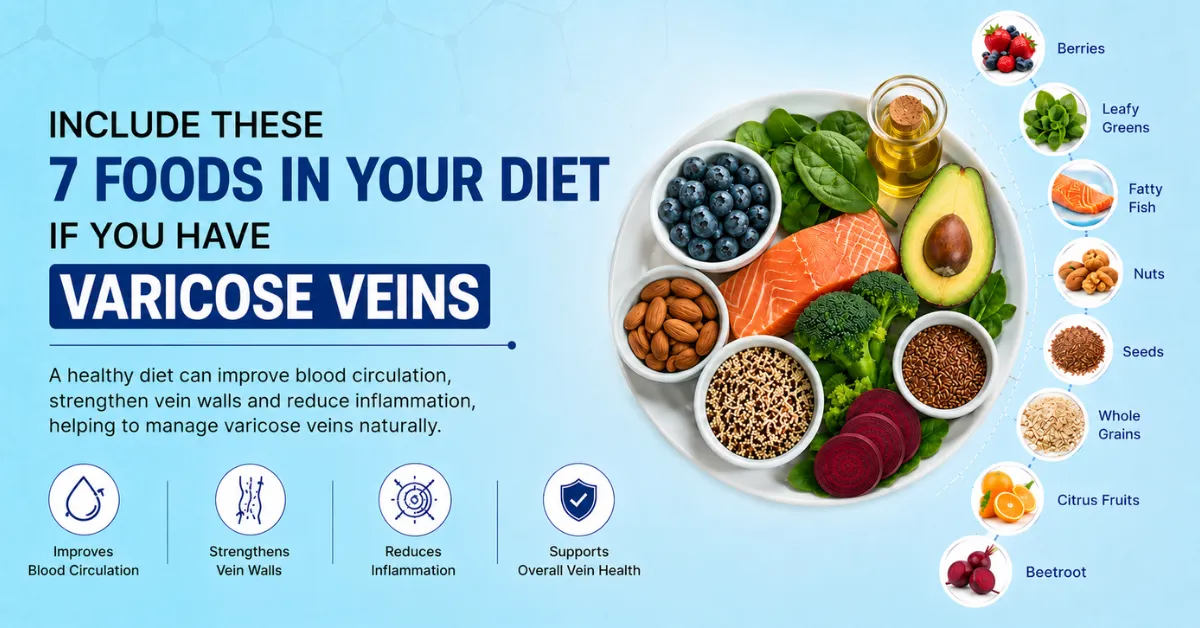
If you're someone who is dealing with varicose veins or looking to improve your vascular health, here are seven foods worth adding to your daily diet.
How Diet Affects Varicose Veins
Healthy veins depend on good circulation and strong blood vessel walls. Certain nutrients help:
- Improve blood flow
- Reduce inflammation
- Strengthen vein walls
- Support healthy body weight
- Minimise fluid retention
Combining a healthy diet with expert Varicose Veins Treatment in Ahmedabad can help improve both symptoms and long-term vascular health.
1. Citrus Fruits
Oranges, lemons, sweet lime, and grapefruits are rich in vitamin C and flavonoids that support blood vessel health.
Benefits:
- Support healthy blood vessel function
- Support collagen production
- May help support healthy circulation
- May help reduce inflammation
Vitamin C is essential for maintaining the elasticity of blood vessels and supporting overall vascular function.
Best options:
- Oranges
- Mosambi
- Lemons
- Grapefruit
2. Berries
Berries contain antioxidants known as anthocyanins, which help protect blood vessels from damage.
Benefits:
- Improve circulation
- Reduce oxidative stress
- Support vascular health
- Help reduce swelling
Popular choices include:
- Blueberries
- Strawberries
- Blackberries
- Raspberries
Adding berries to breakfast or snacks is an easy way to increase antioxidant intake.
3. Leafy Green Vegetables
Leafy greens are rich in fiber, vitamins, and minerals that support healthy circulation.
Benefits:
- Improve blood flow
- Reduce constipation
- Support healthy weight management
- Provide vitamin K for vascular health
Examples include:
- Spinach
- Fenugreek leaves (methi)
- Kale
- Mustard greens
Maintaining a healthy digestive system is important because chronic constipation can increase pressure on veins.
4. Beetroot
Beetroot is known for its naturally occurring nitrates, which help relax blood vessels and improve circulation.
Benefits:
- Promote better blood flow
- Support vascular function
- Improve oxygen delivery
You can consume beetroot as:
- Fresh juice
- Salads
- Cooked vegetable dishes
Many patients with circulation issues include beetroot regularly as part of a heart-healthy diet.
5. Nuts and Seeds
Nuts and seeds provide healthy fats, fiber, and essential minerals that support blood vessel health.
Benefits:
- Reduce inflammation
- Support healthy circulation
- Provide antioxidants
- Promote heart health
Recommended options:
- Almonds
- Walnuts
- Flaxseeds
- Chia seeds
Moderate daily consumption can contribute to overall vascular wellness.
6. Fatty Fish
Fish rich in omega-3 fatty acids may help reduce inflammation and support healthy blood circulation.
Benefits:
- Improve blood flow
- Reduce inflammation
- Support cardiovascular health
Good choices include:
- Salmon
- Sardines
- Mackerel
- Tuna
For those who do not consume fish, omega-3 supplements may be considered after consulting a healthcare professional.
7. Whole Grains
Whole grains provide fiber that helps maintain digestive health and supports weight management.
Benefits:
- Reduce constipation
- Support healthy circulation
- Help maintain ideal body weight
Examples:
- Oats
- Brown rice
- Whole wheat
- Quinoa
Maintaining a healthy weight can reduce pressure on leg veins and improve symptoms.
Foods to Limit If You Have Varicose Veins
Just as some foods support vein health, others may worsen symptoms.
Try to reduce:
|
Food Type |
Why Limit It |
|
Highly processed foods |
May increase inflammation |
|
Excess salt |
Can cause water retention |
|
Sugary beverages |
Contribute to weight gain |
|
Deep-fried foods |
May affect circulation |
|
Excess alcohol |
Can impact vascular health |
Making small, consistent dietary changes often yields better results than extreme restrictions.
Lifestyle Habits That Support Vein Health
Diet works best when combined with healthy habits.
Helpful practices include:
- Walking regularly
- Staying hydrated
- Maintaining a healthy weight
- Avoiding prolonged standing
- Elevating your legs when resting
- Wearing compression stockings if advised
These measures help improve circulation and reduce pressure within the veins.
When Diet Alone is Not Enough
While healthy eating supports vascular health, it cannot reverse advanced varicose veins.
If you experience:
- Persistent leg pain
- Swelling
- Skin discoloration
- Bulging veins
- Leg heaviness
It may be time to consult an Interventional radiologist in Ahmedabad for a proper evaluation.
Modern treatments, including laser therapy and other minimally invasive procedures, can effectively treat the underlying vein condition with minimal downtime.
Understanding Modern Treatment Options
Today, patients have access to advanced solutions, including:
|
Treatment |
Purpose |
|
Laser treatment for varicose veins |
Closes damaged veins using heat energy |
|
Sclerotherapy for varicose veins |
Treats smaller problematic veins |
|
Minimally invasive procedures |
Faster recovery and less discomfort |
An experienced varicose veins doctor in Ahmedabad can recommend the most suitable treatment based on your condition.
Final Thoughts
A healthy diet can play an important role in supporting circulation and managing some symptoms associated with varicose veins. Citrus fruits, berries, leafy greens, beetroot, nuts, fatty fish, and whole grains all provide nutrients that contribute to vascular health.
However, nutrition should be viewed as part of a broader management strategy rather than a standalone solution. For individuals experiencing persistent symptoms, combining healthy lifestyle habits with professional Varicose Veins Treatment offers the best chance of long-term relief.
By making informed dietary choices and seeking timely medical advice, you can take meaningful steps toward healthier veins and improved overall well-being.
Disclaimer: This article is for informational purposes only and should not be considered medical advice. Consult a qualified healthcare professional for diagnosis and treatment recommendations tailored to your condition.
