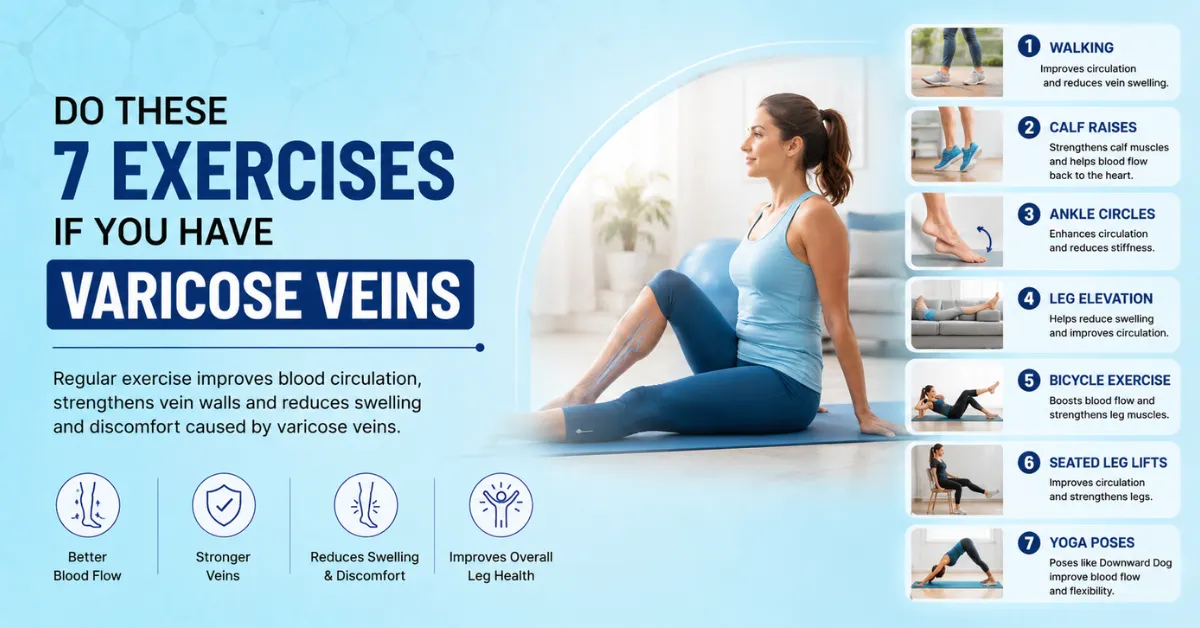
Varicose veins are a common condition that affects many adults, particularly those who spend long hours standing, sitting, or leading a sedentary lifestyle. They occur when the valves in the veins weaken, causing blood to pool and the veins to enlarge.
Regular exercise cannot eliminate varicose veins, but it can help improve circulation, reduce leg discomfort, and support overall vein health. Simple, low-impact movements are often recommended because they encourage healthy blood flow without placing excessive strain on the veins.
The good news is that you don't need an intense workout routine. Simple, low-impact exercises can help improve blood flow in the legs and reduce pressure on the veins.
If you're looking for natural ways to support your vein health, here are seven exercises worth incorporating into your daily routine.
Why Exercise Matters for Varicose Veins
Your calf muscles act as a "second heart" by helping pump blood from the legs back towards the heart.
Regular movement helps:
- Improve blood circulation
- Reduce swelling in the legs
- Strengthen calf muscles
- Prevent blood pooling
- Support healthy body weight
When combined with professional Varicose Veins Treatment in Ahmedabad, exercise can significantly improve comfort and quality of life.
1. Walking
Walking is one of the safest and most effective exercises for people with varicose veins.
Benefits:
- Improves circulation
- Activates calf muscles
- Reduces blood pooling
- Easy to perform daily
How to do it:
Aim for 20–30 minutes of brisk walking at least five days a week. Even short walks throughout the day can help if you have a desk job or stand for extended periods.
2. Calf Raises
Calf raises strengthen the lower leg muscles that help move blood upward through the veins.
Steps:
- Stand with feet shoulder-width apart.
- Slowly rise onto your toes.
- Hold for 2–3 seconds.
- Lower your heels back down.
Repetitions:
10–15 repetitions for 2–3 sets. This simple exercise can easily be done at home or at work.
3. Cycling
Cycling is a low-impact exercise that improves circulation without putting excessive pressure on the joints.
Benefits:
- Strengthens leg muscles
- Improves blood flow
- Supports cardiovascular health
You can choose:
- Outdoor cycling
- Stationary cycling
- Recumbent bikes
Even 15–20 minutes a day can be beneficial.
4. Ankle Rotations
Ankle movements help stimulate circulation in the lower legs, especially for people who sit for long periods.
How to perform:
- Sit comfortably.
- Lift one foot off the floor.
- Rotate your ankle clockwise 10 times.
- Repeat anti-clockwise.
- Switch legs.
This exercise is particularly useful during office hours or long journeys.
5. Leg Lifts
Leg lifts encourage blood flow and strengthen muscles without putting pressure on the veins.
Steps:
- Lie flat on your back.
- Slowly lift one leg.
- Hold for a few seconds.
- Lower slowly.
- Repeat with the other leg.
Benefits:
- Improves circulation
- Strengthens lower body muscles
- Reduces leg fatigue
6. Swimming
Swimming is often considered one of the best exercises for vascular health.
Why it helps:
- Water supports body weight
- Reduces pressure on veins
- Improves circulation
- Provides full-body exercise
The natural pressure of water can also help minimise swelling in the legs.
7. Yoga and Leg Elevation Poses
Certain yoga movements can support circulation and relieve heaviness in the legs.
Helpful poses:
- Legs-Up-the-Wall Pose (Viparita Karani)
- Mountain Pose
- Child's Pose
Benefits:
- Encourages venous return
- Relieves leg fatigue
- Promotes relaxation
These exercises are gentle and suitable for most age groups.
Exercise Routine for Varicose Veins
Here's a simple weekly plan:
|
Exercise |
Duration |
|
Walking |
20–30 minutes daily |
|
Calf Raises |
10–15 reps × 3 sets |
|
Cycling |
15–20 minutes |
|
Ankle Rotations |
5 minutes |
|
Leg Lifts |
10 reps each leg |
|
Swimming |
20–30 minutes |
|
Yoga |
10–15 minutes |
Consistency is more important than intensity.
Exercises to Avoid
Not all exercises are suitable for people with varicose veins.
Use caution with:
- Heavy weightlifting
- High-impact jumping exercises
- Intense sprinting
- Exercises that involve prolonged straining
- Deep squats with heavy weights
- High-intensity interval training (HIIT) without proper guidance
These activities can increase pressure within the veins and make it more difficult for blood to flow efficiently back to the heart. For individuals with moderate to severe varicose veins, excessive strain may aggravate symptoms and lead to increased discomfort after exercise.
You don't need to avoid exercise altogether. Instead, focus on low-impact exercises such as walking, cycling, swimming, and yoga, which promote healthy circulation without placing unnecessary stress on the veins. Before starting any strenuous fitness routine, consult a vascular surgeon in Ahmedabad if you have significant vein symptoms.
Additional Tips for Better Vein Health
Exercise works best when combined with healthy habits.
Consider:
- Staying hydrated
- Maintaining a healthy weight
- Avoiding prolonged sitting
- Taking movement breaks every hour
- Elevating your legs after a long day
- Wearing compression stockings if recommended
Consistent daily habits can help support healthy circulation and overall vein health over time.
When Exercise is Not Enough
While exercise helps improve circulation, it cannot remove existing damaged veins.
You should seek professional evaluation if you experience:
- Persistent leg pain
- Swelling
- Skin changes around the ankles
- Visible bulging veins
- Leg heaviness affecting daily life
A varicose veins specialist in Ahmedabad can assess the severity of your condition and recommend the most appropriate treatment.
Modern Treatment Options for Varicose Veins
Today, many patients benefit from minimally invasive procedures such as:
|
Treatment |
Purpose |
|
Laser treatment for varicose veins |
Closes damaged veins using laser energy |
|
Sclerotherapy for varicose veins |
Treats smaller affected veins |
|
Advanced non-surgical procedures |
Faster recovery and less discomfort |
These treatments address the root cause of varicose veins rather than simply managing symptoms.
Final Thoughts
Exercise is one of the simplest and most effective ways to support circulation and reduce discomfort associated with varicose veins. Walking, cycling, swimming, calf raises, ankle rotations, leg lifts, and yoga can all help improve blood flow and promote healthier veins.
However, while exercise can support vein health, it is not a substitute for medical treatment when varicose veins become severe. If symptoms persist or worsen, consulting a qualified varicose veins doctorin Ahmedabad can help you explore effective treatment options and prevent complications.
A combination of regular exercise, healthy lifestyle choices, and professional care offers the best approach to long-term vein health and overall well-being.
Disclaimer: This article is intended for informational purposes only and should not replace professional medical advice. Consult a qualified healthcare professional for personalised guidance regarding your condition.
